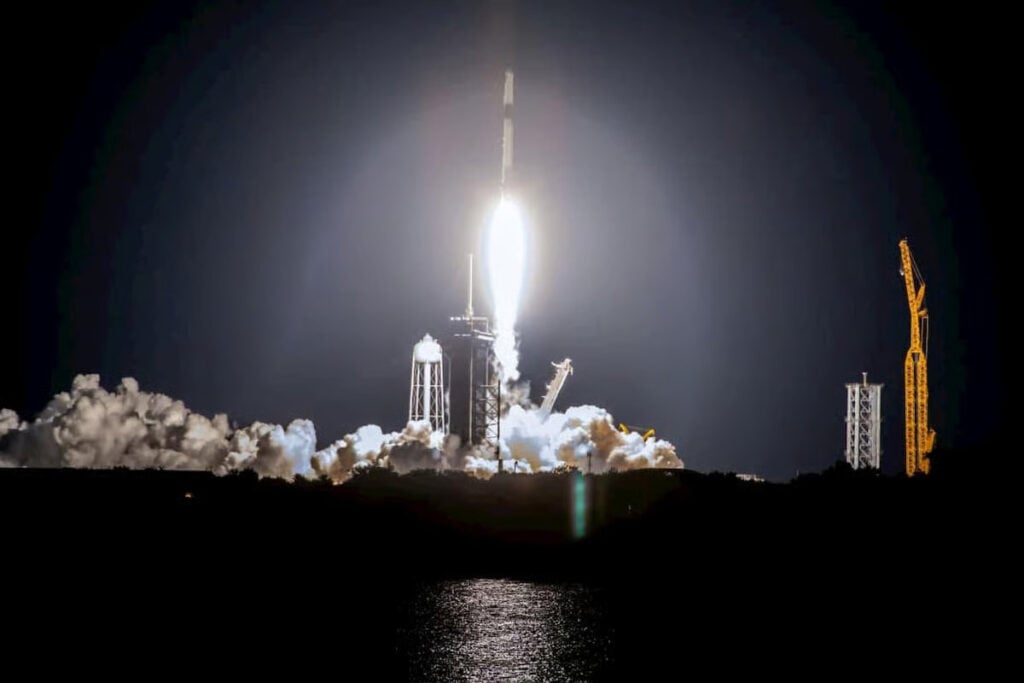

Macro economist Henrik Zeberg has warned that SpaceX’s (NASDAQ: SPCX) valuation following its record-breaking IPO has reached levels comparable to the peak of the Dot-com bubble.
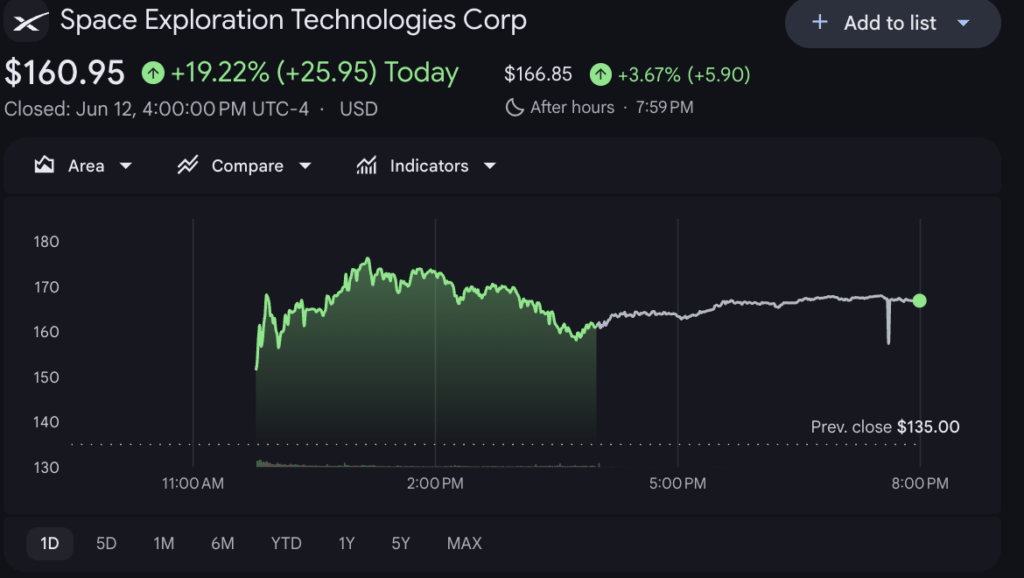
The warning comes after SpaceX completed the largest initial public offering (IPO) in history, raising $75 billion by pricing shares at $135. The stock opened at $150, pushing the company’s market capitalization above $1.77 trillion and reportedly nearing or surpassing $2 trillion during early trading.
At the close of markets on Friday, SPCX was trading at $160, up almost 20% for the day
According to Zeberg’s analysis, shared in an X post on June 13, SpaceX is trading at approximately 119 times projected 2026 sales, surpassing the peak valuation multiple reached by Yahoo during the dot-com boom in 2000.
The comparison centers on the price-to-sales ratio, a metric used to measure how much investors are willing to pay for each dollar of revenue.
Zeberg’s analysis shows SpaceX trading at roughly 119 times estimated 2026 sales, slightly above Yahoo’s peak multiple of about 118 times sales before the dot-com bubble burst.
SpaceX stretched compared to peers
The analysis also highlights how far SpaceX’s valuation has stretched relative to other technology companies. Palantir Technologies (NASDAQ: PLTR) trades at about 63 times sales, while Nvidia (NASDAQ: NVDA) trades at roughly 20 times sales, making SpaceX the most highly valued company in the group on a price-to-sales basis.
The SpaceX IPO marks a dramatic increase in valuation for the aerospace and satellite communications company. Before going public, SpaceX’s private-market valuation had already climbed from approximately $350 billion in late 2024 to significantly higher levels through subsequent funding rounds.
The company’s rapid rise has been driven by continued growth in its reusable rocket business, the Starlink satellite internet network, and expansion into related technologies.
The Dot-com bubble of the late 1990s was marked by investors assigning extreme valuations to high-growth technology companies based on future growth expectations rather than traditional financial metrics.
Many internet firms reached unsustainable price-to-sales and price-to-earnings ratios before the bubble burst, resulting in steep declines in market value. Several prominent companies lost more than 90% of their valuations during the subsequent crash.
Zeberg argued that SpaceX’s current valuation reflects a similar level of investor enthusiasm. Although the company has generated substantial business growth and trailing revenue of approximately $18 billion to $19 billion, its current market capitalization implies exceptionally high expectations for future expansion.