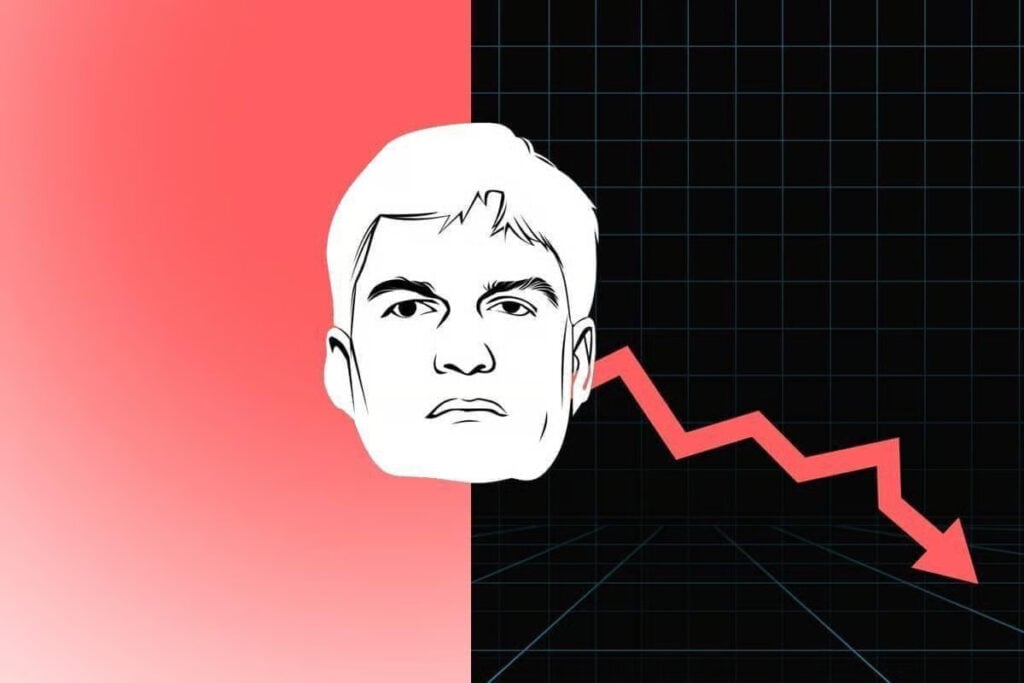

While Michael Burry’s recent shorts have arguably taken the bulk of the attention due to being explicit bets against the artificial intelligence (AI) boom, his largest long position has also been controversial on account of its poor performance in 2026.
The early morning of September 4 only sharpened the critique of the legendary ‘Big Short’ trader since Lululemon Athletica (NASDAQ: LULU) – his biggest bullish bet – suffered a severe 19.22% drop from $121.77 at the closing bell to $98.37 at press time.

Simultaneously, the equity recorded a significant negative milestone as the extended session sent it to eight-year lows: LULU shares haven’t been below $100 since 2018.
Still, Michael Burry apparently remains confident regarding his stock pick since he, despite acknowledging the firm’s many issues over the years, declared he would be buying more while the price is below the $100 mark.
Why Lululemon stock just plunged 19%% overnight
Meanwhile, Lululemon stock’s latest drop was driven by an earnings miss and disappointing guidance – both unveiled after the evening bell on September 3.
Specifically, along with some uncertainty regarding how the $2.92 earnings per share (EPS) should be compared to the forecasted $1.79, the firm missed the $2.46 revenue estimate and disclosed $2.42 instead, and gross profit decreased 1% while its gross margin grew 5.6%.
Perhaps more damningly, Lulumenon revealed it anticipates revenue in the third quarter (Q3) to be in the range between $2.29 billion and $2.32 billion – below the Q2 sales and up to 11% under the same period in the previous year – and that sales for the entire year will be between $10.35 billion and $10.5 billion: up to 7% less than in the previous.
Reacting to the recorded and anticipated weakness, Burry remarked on his past long positions that spent years in the red before ultimately giving him the opportunity to make a profit.
In this context, the famous ‘Big Short’ trader reflected on his Avanti investment early in the century and how he entered the position while the equity was at roughly $12, continued buying the downturn to $2 per share, and eventually saw the company acquired at $22.