
Rep. Richard McCormick, a congressman from Georgia, has disclosed the purchase of shares in L3Harris Technologies (NYSE: LHX), a major defense contractor with extensive ties to U.S. military and space programs.
According to financial disclosure records, McCormick acquired between $1,001 and $15,000 worth of L3Harris (NYSE: LHX) stock on June 12, 2026, in two transactions.
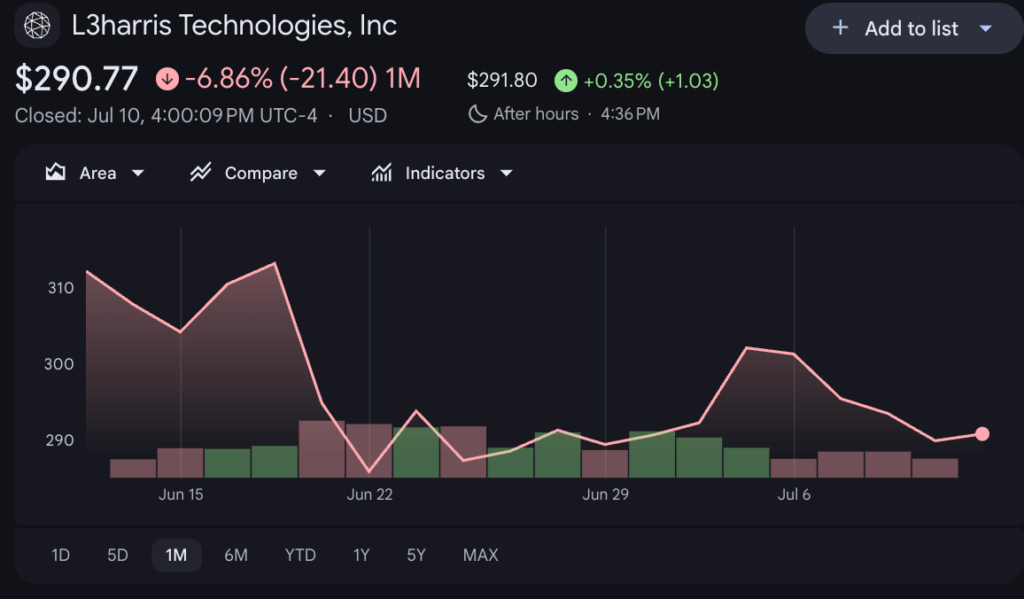
The transaction was disclosed in a filing submitted on July 9, 2026. The purchase came during a recent pullback in L3Harris shares, which has declined approximately 7% since the purchase.
The timing has drawn attention because McCormick serves on congressional committees overseeing tactical air and land forces.
Earlier this year, L3Harris secured a $150 million contract from the U.S. Space Force for the Maintenance of Space Situational Awareness Integrated Capabilities program.
The contract is aimed at sustaining and modernizing critical ground systems that support threat detection, decision-making, and broader U.S. space operations.
The Congress trade adds to ongoing debates over stock trading and potential conflicts of interest.
Receive Signals on US Congress Members' Stock Trades
Stay up-to-date on the trading activity of US Congress members. The signal triggers based on updates from the House disclosure reports, notifying you of their latest stock transactions.
Controversy over L3Harris trade
Lawmakers regularly participate in policy and budget decisions affecting industries in which they may own shares, prompting repeated calls for stricter trading restrictions.
Several proposals in Washington have sought to limit or ban individual stock ownership and trading by members of Congress.
Notably, L3Harris maintains a substantial portfolio of government contracts spanning space surveillance, command-and-control systems, communications technologies, and other national security programs.
As a result, the company’s performance is often closely tied to Pentagon priorities and defense spending trends.
For observers of Capitol Hill trading activity, instances in which lawmakers trade shares of companies operating in sectors they oversee continue to raise questions about transparency and the adequacy of existing ethics rules.