

United States Representative Gil Cisneros made a timely bet on oil services giant Halliburton (NYSE: HAL), a move that coincided with escalating U.S. involvement in Venezuela and a sharp rally in energy stocks.
In this instance, Cisneros purchased Halliburton shares on November 12, 2025, with the transaction valued between $1,001 and $15,000.
The Congress trade was disclosed just over a month later, on December 15. At the time of the purchase, Halliburton shares were trading in the mid-$20 range, following a period of consolidation after an earlier summer rally.
Receive Signals on US Congress Members' Stock Trades
Stay up-to-date on the trading activity of US Congress members. The signal triggers based on updates from the House disclosure reports, notifying you of their latest stock transactions.
By press time, HAL was trading at $30.93, down more than 3% on the day but up 9% over the past week.
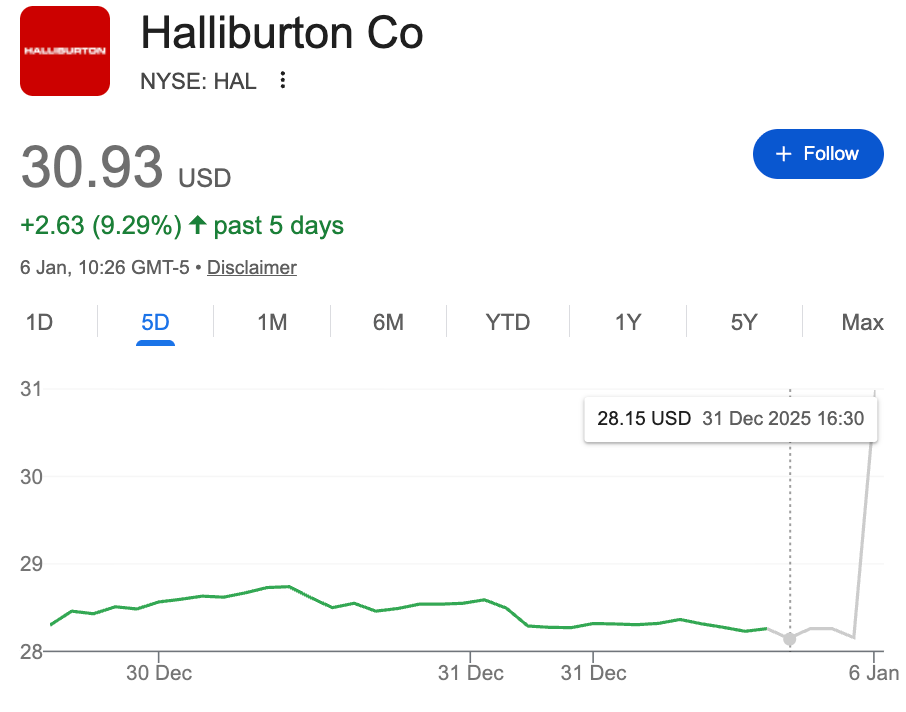
Since the November congressional trade, Halliburton shares have gained more than 20%, significantly outperforming the broader market, with the S&P 500 rising by less than 1% over the same period.
The November purchase followed earlier Halliburton buys by Cisneros over the summer. Since those initial trades, the stock has climbed nearly 50%, driven by rising optimism around oilfield services demand and expectations of a windfall tied to U.S. geopolitical actions involving Venezuela.

Cisneros’ suspicious trade
At the same time, Cisneros’ trade is also in focus, considering his role in Washington. As a member of the House Armed Services Committee, he helps oversee U.S. military and security policy in regions where energy and foreign policy intersect.
However, this raises questions about lawmakers trading stocks sensitive to geopolitically driven policy decisions and the possibility of using privileged information.
Meanwhile, as tensions intensified and U.S. policy toward Caracas hardened following the capture of President Nicolás Maduro, investors have increasingly priced in the potential reopening or restructuring of Venezuelan oil production.
Such a shift would favor drilling, production, and infrastructure firms, with Halliburton seen as a prime beneficiary due to its global reach and experience in politically sensitive oil markets.
Featured image via Shutterstock