
Bank of America Securities has reiterated its ‘Buy’ rating on Nvidia (NASDAQ: NVDA), despite growing uncertainty surrounding the chipmaker’s accounting practices and leadership transition.
In a November 23 research update, analyst Vivek Arya reaffirmed the rating and left the price target unchanged at $280. Based on Nvidia’s press-time price of $125.53, the target implies potential upside of approximately 123.05%.
The reaffirmed rating comes amid a sharp deterioration in Nvidia’s recent stock performance. Shares closed at $125.53 on Friday, down 14% during the session and extending their decline to around 36% from the October 6 record high.
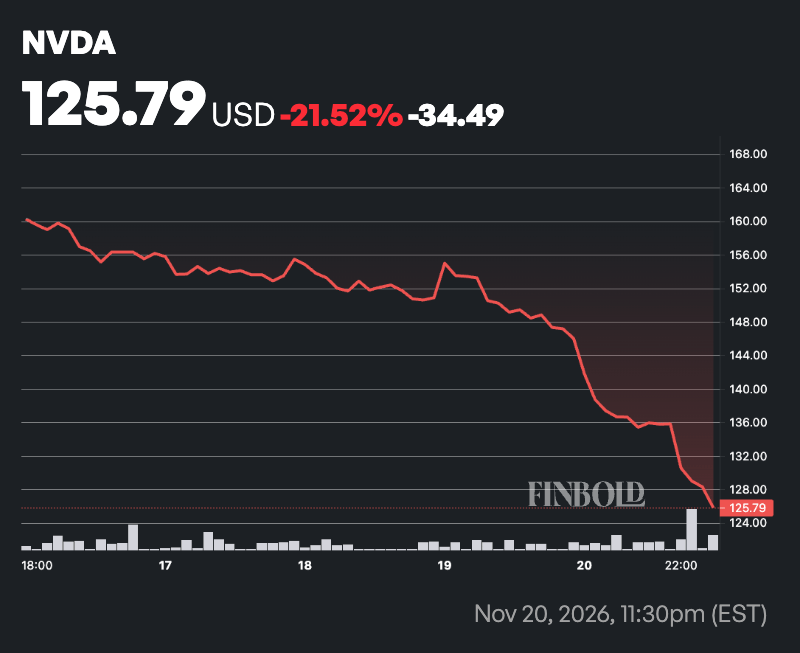
As things stand, Nvidia faces several challenges weighing on investor sentiment, including reports of a Securities and Exchange Commission (SEC) investigation into its accounting practices and the delay of its Form 10-Q filing.
Nvidia’s expanding customer base
Meanwhile, BofA estimates that emerging and neocloud customers account for approximately 25% to 30% of Nvidia’s sales, while direct and indirect demand from China represents another 10% to 15%.
Together, these markets account for an estimated 40% to 45% of revenue, leaving Nvidia exposed to potential disruptions in cloud spending and geopolitical restrictions.
Nevertheless, Arya believes that even a 25% to 50% slowdown in revenue from these segments would leave Nvidia generating approximately $10 to $11 in pro forma earnings per share (EPS).
Under that downside scenario, the stock would trade at approximately 13 times price-to-earnings (P/E), compared with its historical multiple of around 30 times.
BofA’s assessment is more optimistic than the broader analyst consensus, although Wall Street sentiment remains tilted toward more gains in NVDA shares.
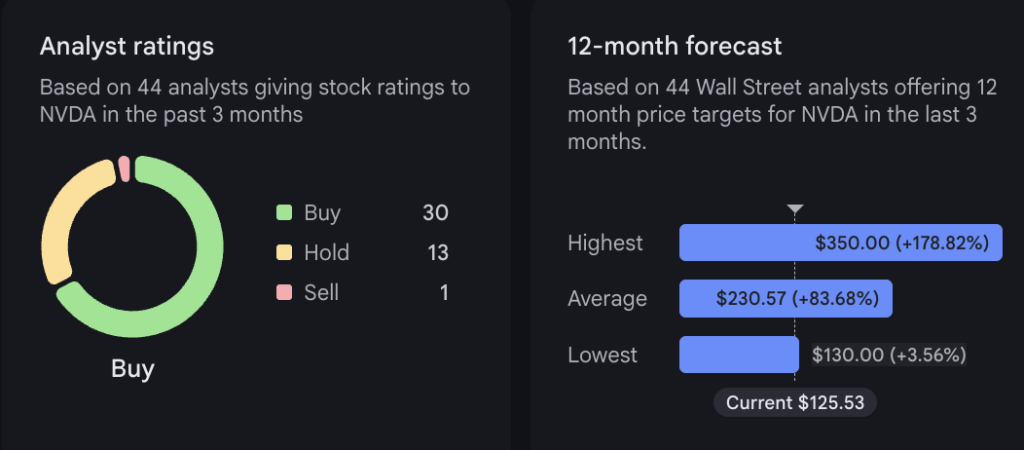
According to the analyst ratings data, 30 of 44 analysts covering Nvidia maintain ‘Buy’ ratings, while 13 recommend ‘Hold’ and one has issued a ‘Sell’ rating.
The average 12-month price target stands at $230.57, implying approximately 83.68% upside from the current price. The highest estimate is $350, while the lowest is $130.
Nvidia stock fundamentals
Indeed, Nvidia’s recent sell-off has persisted despite strong financial results. On November 17, Nvidia reported fiscal third-quarter revenue of $115.8 billion, representing a 103% increase year over year. Data Center revenue, which accounts for the bulk of its business, climbed 110% to $107.6 billion.
The company also forecast fourth-quarter revenue of approximately $130 billion, plus or minus 3%, suggesting that demand for its AI computing infrastructure remains strong.
However, the earnings beat has done little to resolve concerns about Nvidia’s longer-term outlook.
Investors remain cautious about the sustainability of AI infrastructure spending, particularly as major cloud providers and emerging cloud companies commit substantial capital to data center expansion.
Additionally, the leadership transition following the reported exit of CEO Jensen Huang has added to investor concerns, even as President Donald Trump and other Silicon Valley leaders push for the reinstatement of the tech giant’s co-founder.
Featured image via Shutterstock