

Microsoft’s (NASDAQ: MSFT) long-term trading history is showing a recurring seasonal pattern that may offer investors a notable opportunity ahead of January 2026.
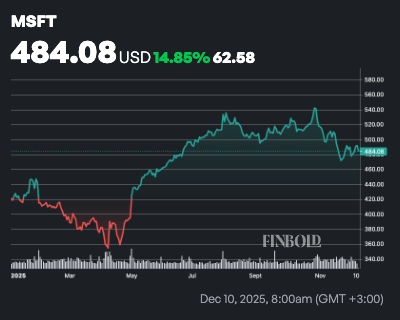
In this line, drawing on 38 years of performance data, the company has consistently tended to outperform in the first month of the year. This outlook comes as MSFT shares have rallied nearly 14% year-to-date, trading at $484 by the final bell on December 9..
Now, over almost four decades, seasonality data indicates that the stock has delivered an average return of 4.3% in January and posted positive performance in 66% of those periods, according to insights from charting platform TrendSpider shared on December 10.
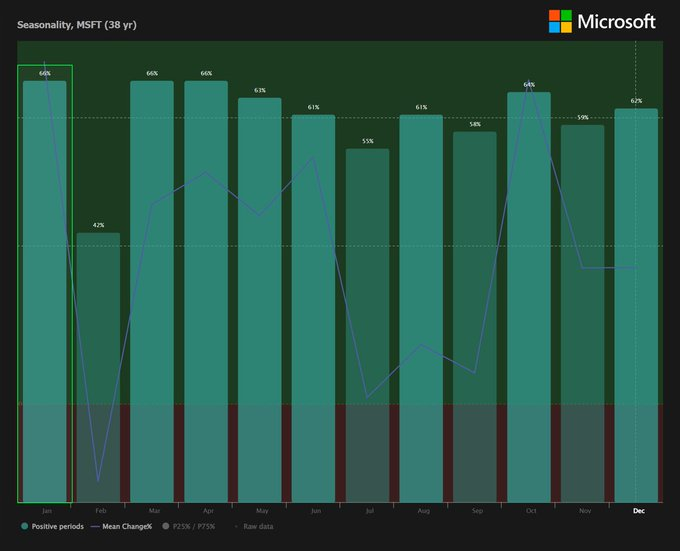
Notably, January offers the strongest combination of frequency and magnitude of gains, outperforming other relatively strong months such as March, April and October. The data also highlighted a spike in Microsoft’s average monthly price change during January, signaling both consistent returns and stronger momentum.
MSFT stock fundamentals
This pattern is particularly relevant heading into 2026, as Microsoft’s leadership in AI, cloud services and enterprise software continues to support long-term revenue growth.
If market conditions hold, this seasonal advantage could provide investors with a timely entry point before the new year.
Meanwhile, the American technology giant is supported by key fundamentals that could help the stock extend its rally.
For instance, in its most recent quarter, the company reported $76.4 billion in revenue, up 18% year-over-year, alongside $27.2 billion in net income and $3.65 in diluted earnings per share, a 24% annual increase. Growth was driven primarily by cloud and AI operations.
These results arrive alongside major product and infrastructure updates. At Ignite 2025, Microsoft introduced expanded Copilot capabilities and new AI “agent” tools across Microsoft 365 and Azure, further strengthening its ability to monetize AI across software and cloud consumption.
The firm is also deploying multibillion-dollar investments to expand global AI and cloud capacity, including large-scale data-center developments in India, Canada and other regions set to come online through 2025–2026.
As these facilities become operational, Microsoft will be positioned to handle higher AI and cloud workloads, supporting stronger Azure demand and reinforcing long-term revenue visibility.
Featured image via Shutterstock