
Investors who put $1,000 into Microsoft (NASDAQ: MSFT) stock at the beginning of 2026 would now be sitting on a loss, reflecting the technology giant’s sharp decline this year.
At the start of 2026, Microsoft stock was trading at $472 per share. Based on its press-time price of $367.34, the stock has fallen about 22.2% year-to-date.
A $1,000 investment made at the start of the year would have purchased roughly 2.12 Microsoft shares. At the current share price, the stake would be worth about $778, representing a loss of approximately $222.
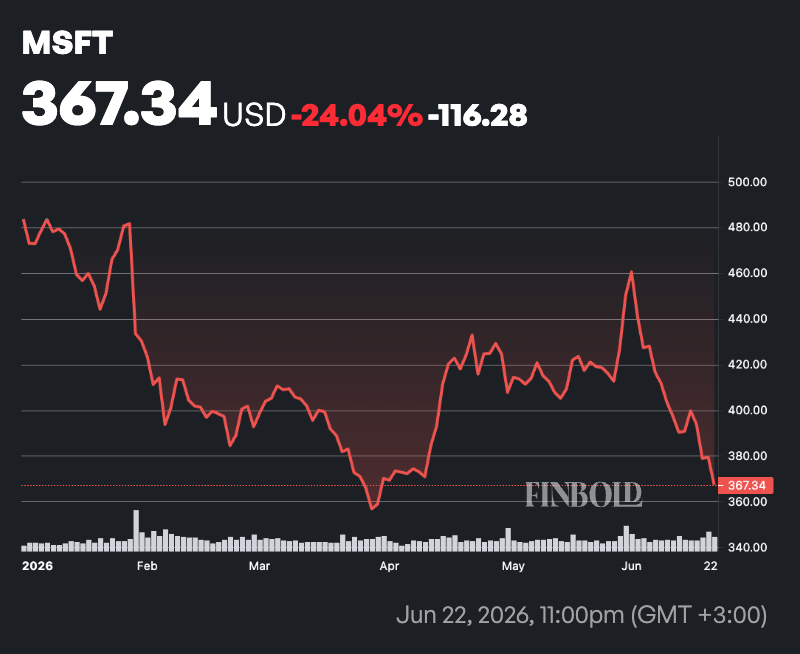
Overall, Microsoft stock has struggled in 2026, entering bear market territory and significantly underperforming the broader market and several large-cap technology peers.
A key factor behind the decline has been investor concerns over Microsoft’s aggressive artificial intelligence spending plans.
The company is expected to invest about $190 billion in capital expenditures during fiscal 2026 as it expands AI infrastructure and data center capacity.
While Microsoft remains one of the leading players in the AI race, some investors have questioned whether returns from these investments will materialize quickly enough to justify the spending.
There have also been concerns surrounding the monetization of AI products such as Copilot. Although Microsoft has surpassed 20 million paid Microsoft 365 Copilot seats, some investors remain cautious about whether AI-related revenue growth can offset the substantial costs associated with building and operating AI infrastructure.
Additional pressure has come from broader market skepticism toward heavy AI spending, post-earnings volatility, and weakness in Microsoft’s gaming segment.
MSFT’s bullish case
Despite the selloff, Microsoft’s underlying business continues to perform well. For instance, the company’s Azure cloud platform has posted growth of roughly 40% in the recent quarter, while AI-related revenue has continued to climb.
Microsoft also reported fiscal third-quarter 2026 revenue of approximately $82.9 billion, up 18% year-over-year, alongside a record commercial backlog.
These results suggest that while investors remain focused on near-term spending concerns, demand for Microsoft’s cloud and AI services remains strong.
Investors will now turn their attention to Microsoft’s next major catalyst: its fiscal fourth-quarter 2026 earnings report, expected around July 29, 2026.