
As markets brace for a widely expected Federal Reserve interest rate increase, macroeconomist Henrik Zeberg has warned that the move would be a “catastrophically wrong” policy decision that risks further weakening an already slowing economy.
Ahead of the Federal Open Market Committee’s latest policy announcement, futures markets have assigned more than a 90% probability to a quarter-point rate increase from the current 3.50% to 3.75% range to 3.75% to 4%.
Expectations have been driven by persistent headline inflation linked to higher energy prices and hawkish signals from Fed Chair Kevin Warsh.
However, Zeberg, in an X post on September 16, head macro economist at Swissblock, argued that the economic backdrop does not support further tightening.
According to Zeberg, labor market conditions are significantly weaker than they were before previous recessions despite the larger size of today’s workforce.
He noted that trend job creation is running below levels seen in the final stages before the 2001 and 2007 downturns.
At the same time, long-term unemployment and the average duration of unemployment are considerably higher than they were ahead of those recessions.
Zeberg also pointed to core inflation readings that are at or below levels recorded before those earlier economic contractions.
In his view, the recent rise in headline inflation has been driven primarily by an oil-related supply shock rather than broad demand pressures that can be effectively addressed through higher interest rates.
Increasing pressure on households
He argued that raising borrowing costs in such an environment would increase pressure on households already dealing with elevated energy expenses and weakening employment conditions.
The economist has previously compared the current situation to past policy errors, including the European Central Bank’s decision to raise interest rates in 2008 despite mounting evidence of economic deterioration.
Notably, Zeberg has consistently maintained that the Federal Reserve’s dual mandate requires policymakers to balance price stability with maximum employment.
Based on current economic data, he believes the greater risk comes from labor market deterioration rather than an overheating economy that requires additional monetary restraint.
His latest warning aligns with a broader bearish view he has expressed over recent years. Zeberg has repeatedly highlighted signs of economic weakness, elevated asset valuations and the danger of central banks relying too heavily on backward-looking inflation data while economic growth slows.
He has also argued that central banks often begin cutting rates before inflation returns to target when labor market conditions weaken. In his view, an excessive focus on the Fed’s 2% inflation goal risks policy mistakes.
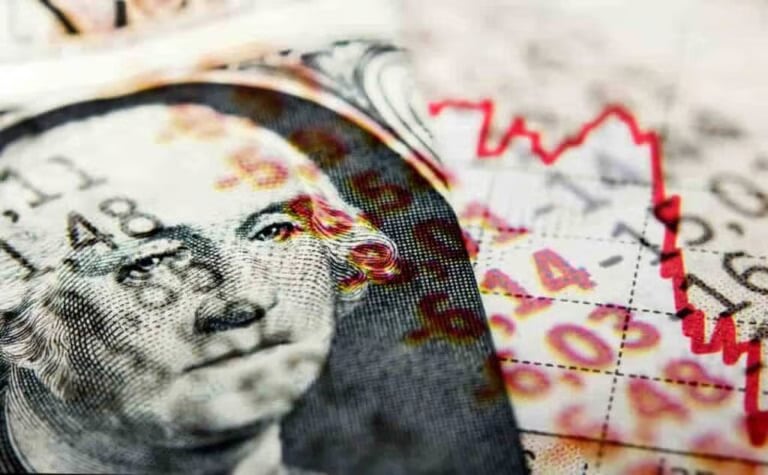
Featured image via Shutterstock