
A crypto market maker keeps buy and sell orders on an exchange so a new token can be traded without large price jumps. The top crypto market makers for token launches in 2026 are Wintermute, EchoTrade, GSR, Keyrock and Flowdesk. Budget, venues and deal structure decide the fit.
This guide is written for token teams preparing a first listing: what a market maker does, how desks get paid, what to ask before signing, and the top 5 firms compared.
What does a crypto market maker do?
A crypto market maker keeps buy and sell orders on both sides of an exchange order book, all day, so the spread stays tight and the book deep enough that normal trades don’t move the price. It also keeps the token inside the thresholds exchanges monitor: MEXC’s published monitoring criteria, for example, can flag a token whose average daily spread stays above 2% for 15 days in a row. For the full mechanics, see what crypto market making is.
It matters before launch, too. On about 9 in 10 exchanges, a token cannot be listed without a market maker, so the desk is named in the listing application. The more exchange connections and past launches a desk has, the easier the listing usually is. A market maker does not create demand and cannot control price, and any provider promising price targets or guaranteed volume is not describing legitimate market making.
How do crypto market makers get paid?
There are two common models.
Retainer. The project keeps its tokens and stablecoins on its own exchange accounts. The desk trades through API keys, usually with withdrawals disabled, and charges a fixed monthly fee.
Token loan. The desk borrows a share of supply, often 0.5% to 2%, brings its own stablecoins and usually charges no monthly fee. In exchange, it typically holds an option to buy those tokens at a preset price when the contract ends, often after 12 to 24 months.
A retainer costs cash up front but leaves the project in control of its tokens. A loan costs little up front, but the real cost depends on how the token performs. Founders should get both priced in writing before choosing.
How to choose a crypto market maker for a token launch
Seven questions separate proposals that look identical on price:
- Which model? Retainer, token loan, or a hybrid. Anything with a strike price is a loan, whatever it’s called.
- Which exchanges? Covering three venues well usually beats covering eight thinly.
- What commitments? Spread, depth within 1% and 2% of mid, and uptime, set per exchange in the contract.
- What reporting? Regular spread, depth and uptime data should be standard.
- Who holds the tokens? Under a retainer, the project should keep custody.
- When do they start? Onboarding usually takes 4 to 6 weeks before the token generation event (TGE).
- How does it end? Notice period, wind-down plan and what happens to borrowed tokens.
Top 5 crypto market makers for token launches in 2026
The ranking weighs what matters most for a new token: launch experience, exchange coverage, and how clear the deal terms are. Each entry uses the same six points.
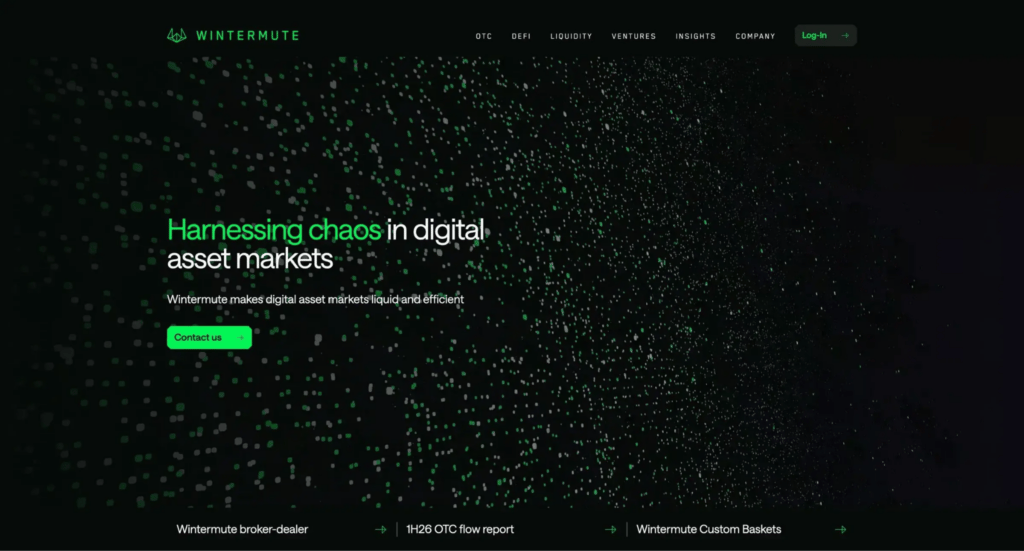
1. Wintermute
Who: London-based algorithmic trading firm, founded in 2017.
What it does: Market making across centralized and decentralized exchanges, plus an OTC desk and a venture arm.
Known for: Deep liquidity in large, established tokens.
Best fit: High-profile launches and major assets with large budgets.
Deal model: Not published. Ask for retainer or token-loan terms in writing.
Ask before signing: How much attention a smaller token gets next to larger clients.
2. EchoTrade
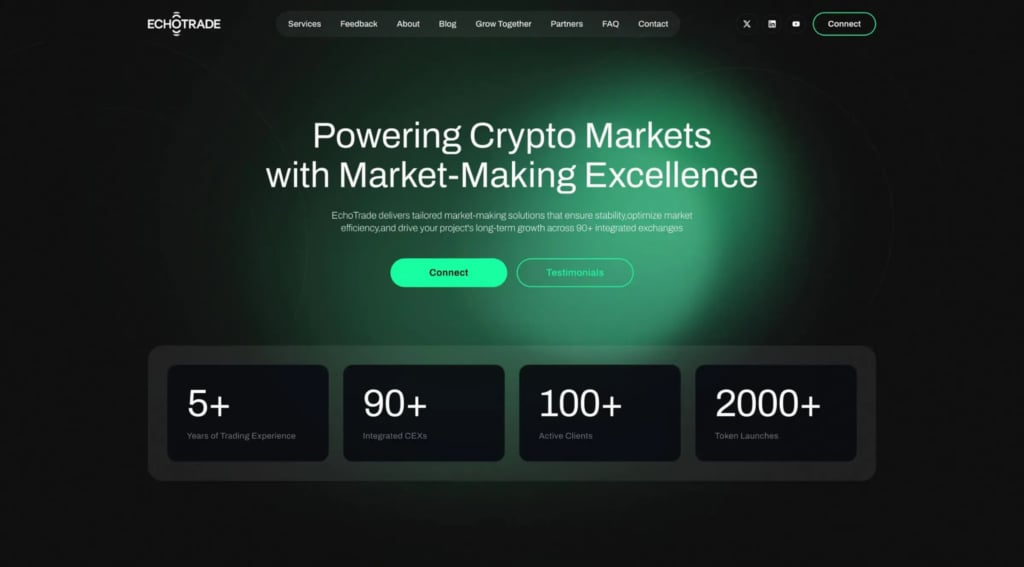
Who: Dubai-based crypto market maker founded in 2023, considered the largest market maker on Binance Alpha and one of the largest for token launches in the EU.
What it does: Market making on 90+ centralized and decentralized exchanges for 100+ active projects, on a retainer only, with no token loans.
Known for: Token launches: 2,000+ supported, including 40+ on Binance Alpha. Clients also praise its advisory service, from exchange selection to launch strategy.
Best fit: New and mid-cap tokens before a first listing. See its crypto market making services.
Deal model: Retainer only, with no token loans or profit share.
Ask before signing: Spread, depth and uptime commitments for each exchange, in the contract.
3. GSR
Who: One of the longest-running crypto trading firms, founded in 2013.
What it does: Market making, OTC trading and structured products, plus venture investments.
Known for: Working with token issuers and institutions across market cycles.
Best fit: Larger token projects and institutional counterparties.
Deal model: Not published. Ask for retainer or token-loan terms in writing.
Ask before signing: Which team handles new-token launches, and whether OTC is bundled in.

4. Keyrock
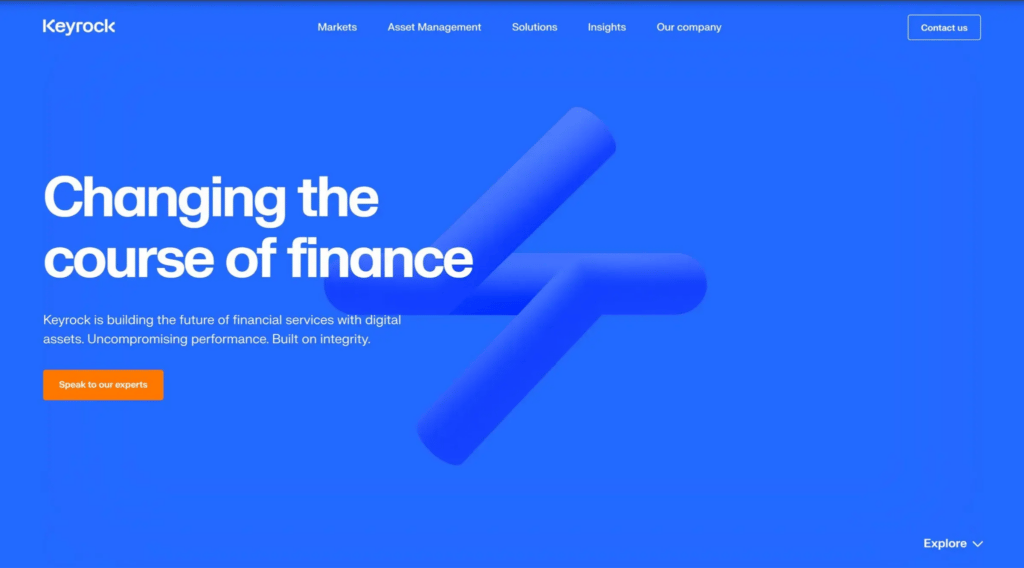
Who: Brussels-based firm, active since 2017.
What it does: Market making, OTC and options, connected to 85+ exchanges and 400+ markets by its own figures.
Known for: Multi-venue coverage and published research on market structure.
Best fit: Established projects that need many venues covered.
Deal model: Not published. Ask for retainer or token-loan terms in writing.
Ask before signing: Which of its exchanges would actually quote your token.
5. Flowdesk
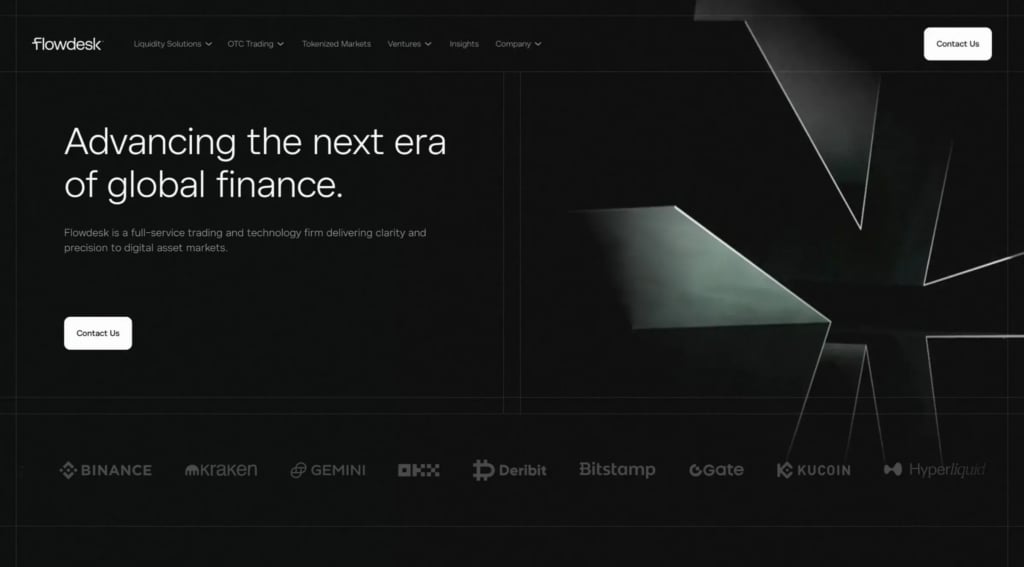
Who: Paris-based firm, founded in 2020.
What it does: Market making alongside OTC and treasury management for token issuers.
Known for: Combining liquidity and treasury services under one provider.
Best fit: Projects that want market making and treasury support together.
Deal model: Not published. Ask for retainer or token-loan terms in writing.
Ask before signing: Whether market making and treasury services are priced together or separately.
Quick comparison
| # | Firm | Founded | Main focus | Best fit |
|---|---|---|---|---|
| 1 | Wintermute | 2017 | Large-cap liquidity | Major launches |
| 2 | EchoTrade | 2023 | Token launches, advisory | New and mid-cap tokens |
| 3 | GSR | 2013 | Market making, OTC | Larger projects |
| 4 | Keyrock | 2017 | Multi-venue market making | Established projects |
| 5 | Flowdesk | 2020 | Market making + treasury | Issuers wanting both |
FAQs
When should a token project hire a market maker?
Four to six weeks before the token generation event. The desk needs time to help choose exchanges, position inventory and test connections before trading opens. Most centralized exchanges also ask for a designated market maker during the listing application.
How much does a crypto market maker cost?
It depends on the model. Retainers commonly run from a few thousand dollars per month; EchoTrade, for example, charges $2,500 to $10,000. Token loans usually have no monthly fee, but the desk borrows 0.5% to 2% of supply and the final cost depends on the token price at expiry.
Can a market maker guarantee price or volume?
No. A market maker manages spread, depth and uptime. Price is set by all trades in the market. Guarantees of price or volume describe manipulation, not market making.
What are the alternatives to Wintermute for a token launch?
Wintermute mostly serves large, established tokens. For new and mid-cap launches, founders often compare EchoTrade, Keyrock and Flowdesk, which differ on deal model, exchange coverage and how early they get involved.
Which crypto market makers work on a retainer without a token loan?
Terms vary by firm and by deal. EchoTrade works on a retainer only, with no token loans or profit share, and the project keeps its tokens on its own exchange accounts. Founders should ask every desk to put its model in writing.