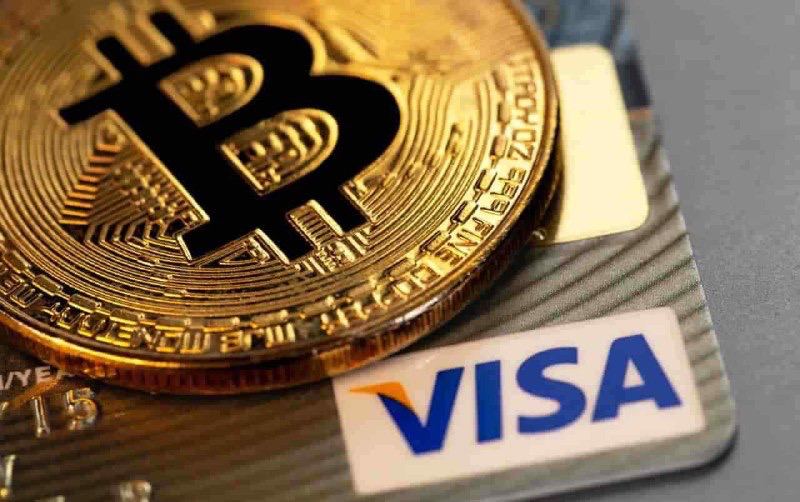

Picture a hotel front desk in a city you have never visited. Your balance is all in stablecoins, the receptionist points to the card terminal, and the only question is whether the payment will go through. The terminal has no interest in USDT. What counts is which network your card runs on.
That is why Visa matters here. As the largest western card network by payment volume and revenue, it extends its reach to crypto card holders too, which means payments at over 150 million merchants worldwide.
How It Works
A crypto Visa card does not spend digital assets directly. It draws on a stablecoin balance (commonly USDT or USDC) and converts it to US dollars upfront or at the point of sale, depending on the product. If the payment is in another currency, a foreign exchange conversion applies as well. The process is usually instant and automatic, so it feels like tapping any regular Visa card.
Where Can You Pay?
The network defines the reach. A Visa crypto card is designed to work anywhere Visa is accepted, which covers more than 150 countries, although actual availability also depends on the card issuer. Assets matter as well: USDC or USDT on one chain may be accepted natively while another chain needs a bridge or an extra conversion step.
The merchant always receives local currency, and the swaps stay out of sight. Adding the card to Apple Pay or Google Pay also allows contactless payments at terminals, the same way as with a bank card.
What the Network Controls
The network works as the rails and rulebook that connect issuing banks, card programs and merchants. Two things follow from that for anyone paying abroad.
First, the card works wherever Visa is accepted, online and in physical shops, and shared standards for security, disputes and routing let a card issued in one country work across borders. Second, transactions carry the same Merchant Category Codes (MCCs) as traditional cards, so the network or the issuer can block certain MCCs, countries or spending amounts even when the wallet holds enough funds.
What Differs From Card to Card
Regional availability is only one variable. Cards also vary in the assets they support, how they spend funds, total fees and rewards. Custodial cards from centralized providers like Clapp hold funds on the platform, while self-custody cards connect to wallets where users control the keys.
Some cards spend existing fiat or crypto balances, much like a conventional prepaid card. Others extend a credit line or allow borrowing against collateral, so holdings aren’t sold at checkout. Dual-mode products let the holder switch between spending a balance and borrowing against a vault or credit line.
How Much It Costs
Many base or virtual cards have $0 monthly fees. The Clapp Crypto Card, powered by USDT or USDC, also charges $0 on crypto-fiat swaps at checkout. Higher tiers, such as physical metal or VIP plans, can charge monthly or annual fees, from nothing up to hundreds of dollars a year.
Issuance commonly costs around $5 to $25, or the local equivalent, and occasionally more depending on the tier or card format. The charges that surprise people tend to come later. Foreign exchange markups range from nothing to around 2% or more, depending on the card, the currency and the region. ATM withdrawals, if available, usually come with daily caps and their own fees.
Some cards also charge for loading funds or for converting crypto to fiat at purchase. With any Visa crypto card, standard Visa and payment processor fees apply on top of what the issuer charges.
Before relying on a card abroad, a quick look at the issuer’s supported countries, limits and fee table avoids surprises at the till. A stablecoin balance is only as useful as the card that spends it.
With a crypto card, Visa acceptance gets the payment through the door, but supported countries, limits and fees still depend on the issuer. A quick look at the issuer’s fee table avoids surprises at the till. A stablecoin balance is only as useful as the card that spends it.
Featured image via Shutterstock.