
President Donald Trump’s Liberation Day – as well as subsequent – tariffs were controversial from the get-go and, as it turned out in a February Supreme Court Ruling, they also turned out to have been unconstitutional.
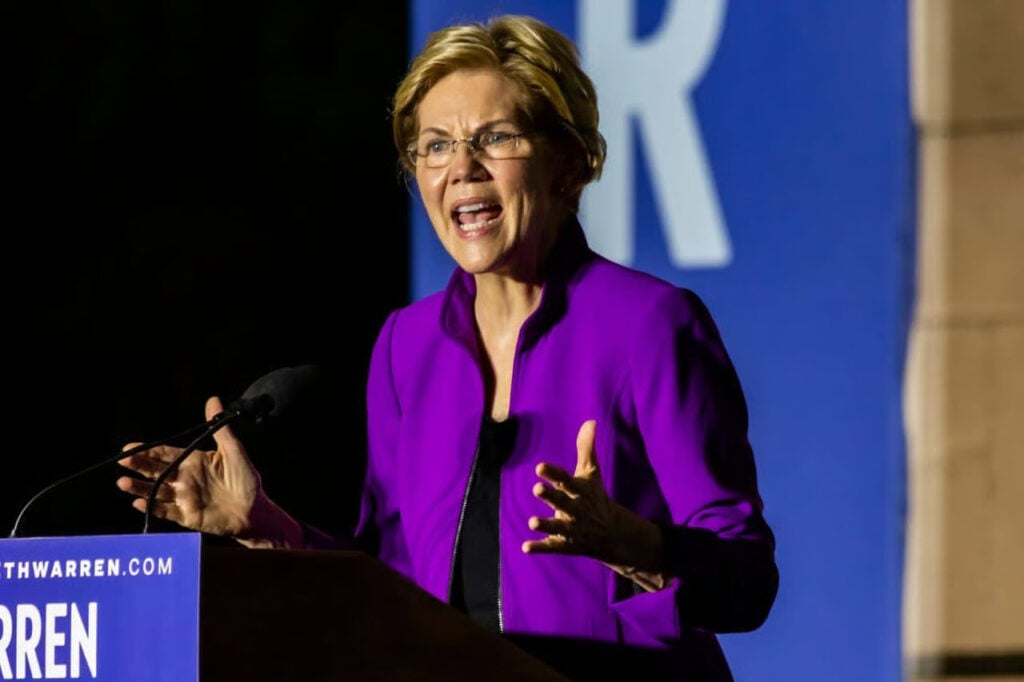
The subsequent program to refund the approximately $166 billion collected, however, also proved contentious, and Senator Elizabeth Warren has been pushing to, as her view might suggest, level the playing field.
Specifically, on August 7, the politician began urging large corporations to forward tariff refunds to consumers rather than keeping them for themselves, while noting that companies like Walmart (NYSE: WMT) and Apple (NASDAQ: AAPL) are set to gain billions from the scheme:
Many companies will receive substantial windfalls: Walmart is expected to receive a refund of up to $10.2 billion; Apple is reported to have received $2.2 billion in refunds; Target may be eligible for up to $2.2 billion in refunds; Amazon received $600 million in refunds in the second quarter of 2026; and Energizer received a refund of around $50 million. But to date, consumers have received no refunds on the increased prices they paid — and giant corporations that raised prices appear to have no plan to provide these refunds.
Indeed, the vast majority of due-related costs were forwarded to everyday Americans in the form of higher prices.
American households can expect more than $1,200 if Warren successfully pressures Corporations
Considering that there are an estimated 277 million adults in the U.S., Senator Warren’s plan could theoretically lead to each of them, on average, receiving a $600 check as reimbursement. If the hypothetical program is based on households, each one would receive approximately $1,276.
Notably, the potential figures are close to previous estimates of additional tariff-related annual costs to Americans.
Is Senator Warren’s campaign rooted in facts?
Elsewhere, though acquiescing to Senator Warren’s initiative would almost certainly constitute a logistical nightmare, it is difficult not to see the merit behind the idea.
At their core, tariffs are widely regarded as a regressive form of tax – a type of tax that takes more from the less an individual has – due to being levied on goods poorer households tend to spend a greater share of their money on.
Moving from that base, the ongoing refund schemes turn into a program of upward wealth redistribution.
With American companies and consumers paying the vast majority of additional taxes, and major and often international corporations receiving the reimbursements, the program effectively means that entities that never bore the costs are benefiting from the Supreme Court ruling.
Lastly, the wage and productivity trends observed over the previous five decades strongly indicate that the returned $166 billion will disproportionately land in the pockets of the wealthiest people at each firm – the same people who, on an individual level, bore little of the regressive tax.
Featured image by David Garcia via Shutterstock