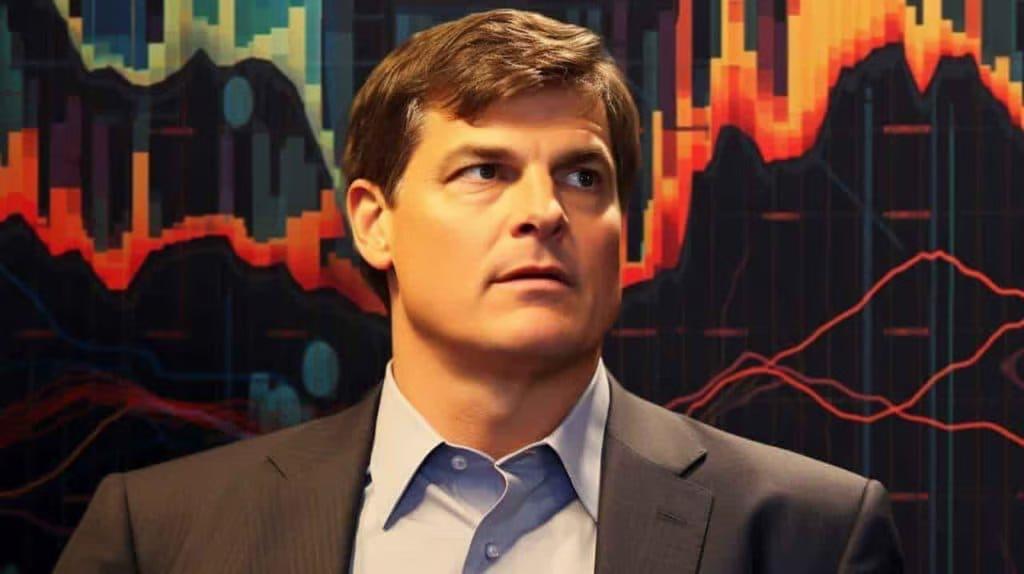

On Friday, July 25, the legendary ‘Big Short’ trader Michael Burry disclosed he has increased his bet against the semiconductor giant Nvidia (NASDAQ: NVDA) while the stock was changing hands at roughly $210.28.
The move added to the $186 million short position he originally assumed in the third quarter (Q3) of 2025, before deregistering Scion Asset Management, and came amidst the latest NVDA downturn that ignited on July 22.
By press time on Tuesday, July 28, Burry’s bearish bet appears to be paying off as Nvidia equity opened the day’s session at $193.45, extending the weekly losses to 6.15% and pushing its monthly performance into the red.

Still, the options purchased last year are likely yet to turn profitable for the short trader unless they were purchased at the very end of Q3. Indeed, Nvidia stock was changing hands between $170 and $190 for most of the time frame and only crossed above $200 in the final days of October, 2025.
Michael Burry’s increase of the bet against Nvidia is in line with his long-standing view of the instability of the artificial intelligence (AI) ‘boom.’
Why Michael Burry is betting against Nvidia stock and the AI ‘boom’
In recent months, the legendary investor has been sounding the alarm regarding the debt private credit providers have accumulated, and that is mostly linked to the chip leases and the data center buildout.
According to Burry, the trend could turn into a contagion that risks the wider economy, especially in the context of rising long-term bond yields.
Notably, though the ‘Big Short’ trader has faced extensive criticism in recent months for staying bearish through the ‘boom,’ he is far from the only one sounding the alarm.
Data center construction has, despite the massive capital expenditure (CapEx) it is consuming, apparently not been going according to plan, with the numerous delays, cancellations, and a severe mismatch between the number of announced groundbreakings and completions.
Furthermore, Nvidia’s recent $250 billion backstop agreement with OpenAI reignited concerns over circular financing, with some of the company’s greater critics raising the question of whether the chipmaker is funding its own customers so they can remain its customers.
Together, the developments also contribute to the concerns that much of the hardware that the world’s biggest semiconductor company sold might be slowly depreciating, unplugged and in warehouses, all the while the new Vera Rubin platform needs to exceed Blackwell sales.
However, it is notable that the bearishness is far from universal and that the majority of companies involved with AI – including Nvidia – remain in the green year-to-date (YTD) and that NVDA shares still command the confidence of Wall Street.
Nvidia is not the only short position Michael Burry increased in July
Elsewhere, the world’s largest blue-chip chipmaker was not the only short position Michael Burry increased in late July.
Also on Friday, the ‘Big Short’ investor disclosed raising his bets against Micron (NASDAQ: MU), Caterpillar (NYSE: CAT), and the iShares Semiconductor ETF (SOXX).
Burry’s Tesla (NASDAQ: TSLA) and Palantir (NASDAQ: PLTR) short positions, reportedly, remain intact as well.