

Microsoft’s (NASDAQ: MSFT) next quarterly dividend has been scheduled for Thursday, June 11, 2026, when the tech company is going to issue $0.91 per share to shareholders as of May 21 this year.
This dividend represents no change from the previous two payouts, issued on March 12, 2026, and December 11, 2025, respectively.
As the math suggests, investors holding 100 Microsoft shares will earn $91 in dividend income next week. At this rate, the yearly payments will total $364.

Microsoft dividend returns
Microsoft currently has a Forward Dividend Yield (FWD) of 0.86%, with an annual payout ratio of $3.80.
Overall, the dividend payments have provided only limited protection for shareholders this year as the tech giant’s stock remains under pressure in 2026.
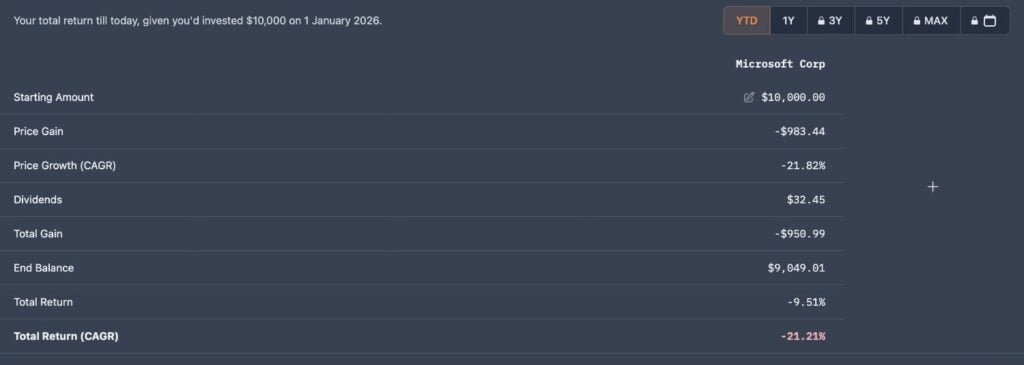
For example, a hypothetical $10,000 investment in the tech leader at the start of the year would have generated just $32.45 in dividend income by press time.
This is because, while the payout offered a modest boost to returns, it was overshadowed by a $983.44 decline in the stock’s value over the same period.

As a result, the investment would have produced a net loss of around $950, leaving the portfolio worth approximately $9,050. Including dividends, the total return on that investment would thus stand at roughly -9.50% year-to-date.
Microsoft dividends overview
Microsoft still stands out as one of the technology sector’s most consistent dividend growers, having increased its annual payouts for 24 consecutive years. However, its 0.86% yield is still below the technology sector’s average dividend yield of 1.37%.
Also worth noting is Microsoft’s average price recovery period of just 1.7 days following ex-dividend dates, indicating that the stock has historically regained any dividend-related price decline relatively quickly.
All in all, though, Microsoft remains primarily a growth-oriented stock. With a market capitalization of approximately $3.34 trillion and a dividend yield below 1%, the company’s shareholder returns continue to be driven largely by share-price appreciation.
Conversely, dividends can be seen as more of a supplementary source of income rather than the primary driver for investors.
Featured image via Shutterstock