

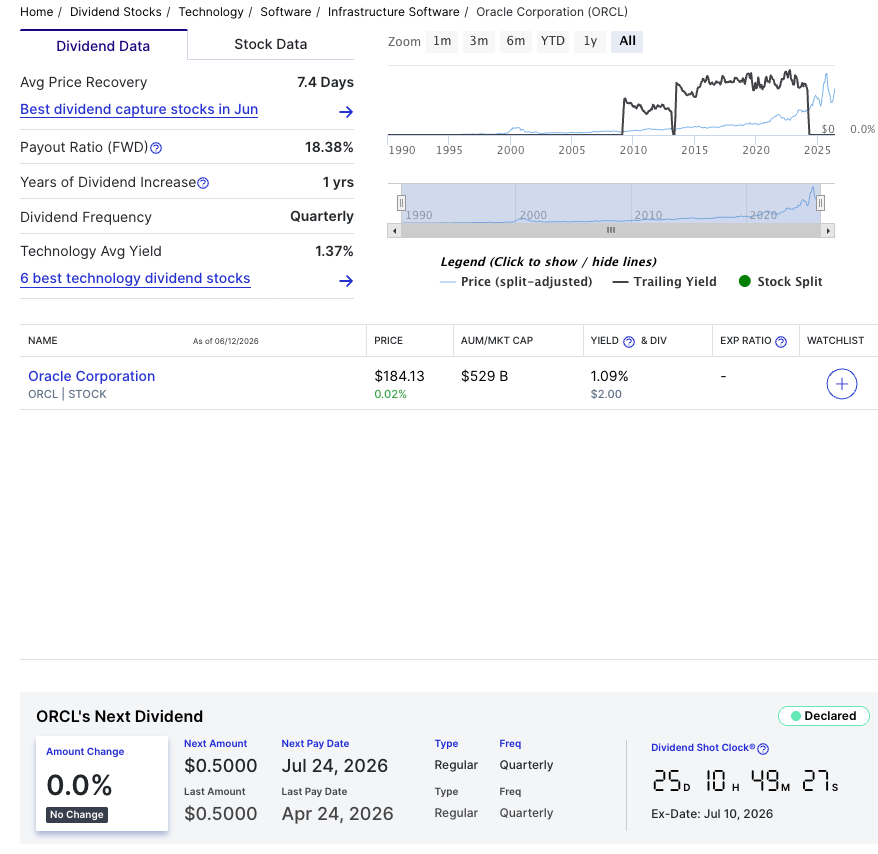
Oracle (NYSE: ORCL) will pay its next quarterly dividend on July 24, 2026, with shareholders set to receive $0.50 per share.
As a result, investors holding 100 ORCL shares will collect $50 from the upcoming payment before taxes.
The software and cloud computing giant declared the dividend with an ex-dividend date of July 10, 2026.
The payout remains unchanged from the previous quarter, bringing Oracle’s annual dividend to $2 per share and yielding approximately 1.09% at its current share price.
At the current payout rate, investors holding 100 shares would generate $200 in annual dividend income.
Oracle has maintained a relatively modest dividend yield throughout its expansion, reflecting management’s focus on reinvesting capital into growth initiatives rather than prioritizing larger cash distributions.
The dividend payment comes during a volatile period for Oracle stock. Shares closed at $184 on June 12, down roughly 15% from levels above $200 reached earlier in the week following the company’s latest earnings report.
Oracle fundamentals
While Oracle delivered strong fiscal 2026 results, investors focused on the scale of planned AI-related spending and the potential impact on margins, cash flow, and debt levels.
Oracle reported fiscal 2026 revenue of $67.4 billion, up 17% year over year, while cloud revenue surged 39% to $34 billion. Demand for Oracle Cloud Infrastructure continued to accelerate, helping the company build a record remaining performance obligation (RPO) backlog of $638 billion.
The backlog increased by approximately $85 billion from the previous quarter and provides significant visibility into future revenue growth.
Much of the contracted business is tied to large multi-year cloud and artificial intelligence agreements that are expected to support Oracle’s expansion over the coming years.
Despite those strong fundamentals, concerns about rising debt levels, margin pressure, and elevated AI infrastructure spending weighed on investor sentiment and pushed the stock lower in the days following earnings.