
Honorary membership in the Eurasian Digital Technologies Association isn’t granted for paying dues or years of service — only after a multi-stage selection process and a unanimous decision by the expert commission.
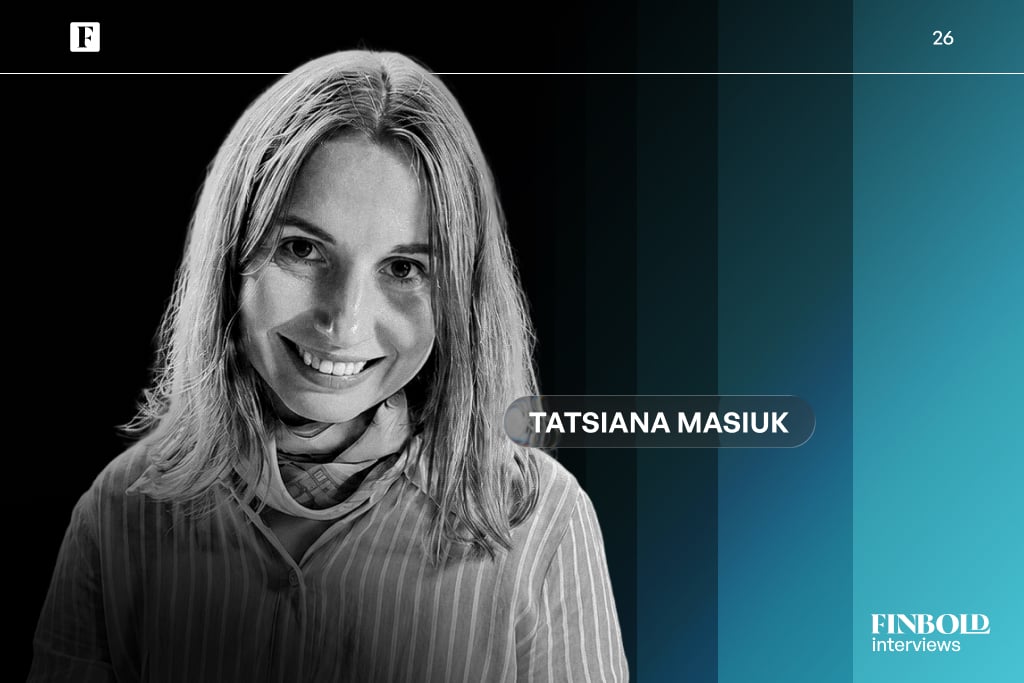
In 2025, that status went to Tatsiana Masiuk — an expert in international finance, and today a key account manager at an American telecommunications company.
For Tatsiana, the same task keeps showing up in different settings: turning a complex financial or operational structure into a result that can be counted.
Today that task is playing out on new ground — the company she works for has entered markets in several new U.S. states over the past three years and closed last year with $2.4 million in sales.
Tatsiana, hello! Let’s start with the most recent news: how were you informed about your honorary membership in the Eurasian Digital Technologies Association? Was it expected or a surprise?
Hello. The process took several months — portfolio, letters of recommendation, waiting for the committee’s decision — so there was some sense it was coming.
What sets this status apart from regular membership?
Regular membership is just paying a fee. This involves a full audit: a portfolio, a resume, completed projects, at least two recommendation letters from people in the field.
Then the decision is made jointly by the Presidium and the Expert Commission, and it has to be unanimous. The status is granted permanently — you can’t renew it through paperwork.
How would you describe your own approach — the thing that ties together public finance, banking, and business development into one logic?
The ability to see where money is stuck, and to get it moving again. It doesn’t matter whether it’s sovereign debt or a contract with a client in a single state — the principle is the same: find the bottleneck and remove it.
You’ve made a fairly unusual jump — from public finance into the telecom business in the US. How did that happen?
I started out with public financing questions. Over time, I became interested not just in how to raise capital, but in how to build mechanisms that help businesses and economies grow.
So the interest shifted from the money itself to what it sets in motion?
Exactly. That’s what led me first into international banking, and then into projects at the intersection of finance and technology. Telecom just turned out to be the industry where that particular profile is in demand right now.
Tell me about your current work. The company entered new states — what was behind that growth?
We expanded our presence into new regions systematically: steady work with major clients and partnerships. Last year that brought in around $2.4 million in sales.
For a telecom business focused on infrastructure projects, that’s a notable result — every contract here means a long approval cycle and a high cost for mistakes.
What trends are you seeing in the connectivity industry from a business standpoint?
The market is shifting toward private networks and infrastructure built for a specific client.
In May, I was among the attendees at an industry conference in Florida, where investment in that kind of infrastructure and regulatory questions were on the agenda — a topic that lines up with what we’re seeing with our own clients.
Is there a quote or a formula you’d offer to people starting out in finance?
Innovation isn’t invention for its own sake. It’s the ability to see opportunity where others see limits, and to turn hard problems into solutions that hold up.
What will you be working on now, after this new status?
I plan to focus on projects at the intersection of finance and technology, on expanding international partnerships, and on making financial processes more accessible and transparent — measurably, in the numbers of actual deals.
I want finance to be more than a tool for managing capital — a mechanism that helps people, companies, and governments realize their potential.
Read more interviews here.