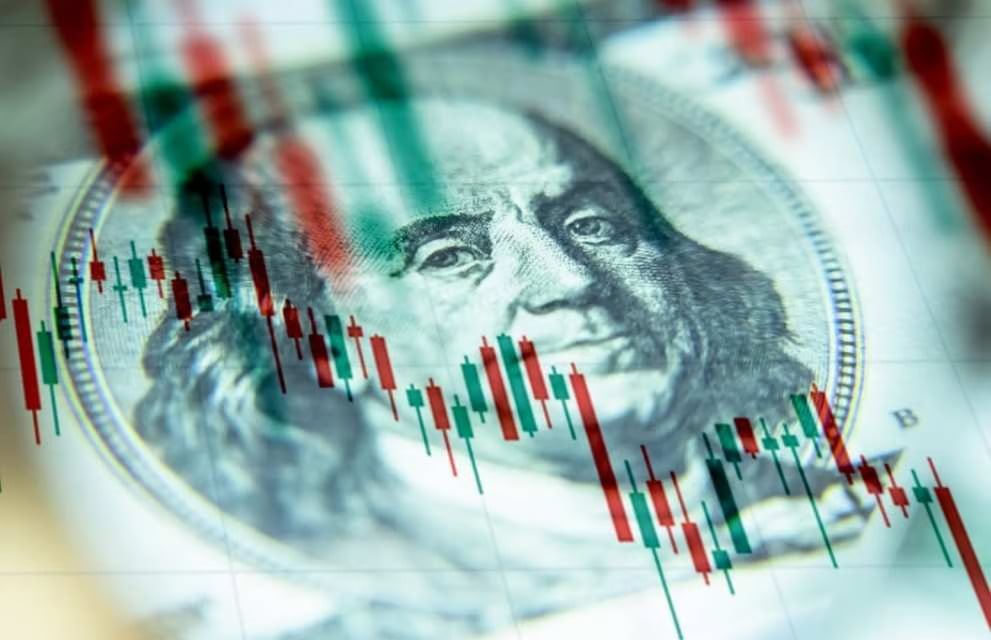

Economist Steve Hanke warned ahead of the U.S. midterm elections that the current balance of revenue and expenditures in the artificial intelligence (AI) sector puts the risk of a financial crisis at 40%, with the potential downside for big tech possibly being as large as 70%.
Specifically, speaking in a David Lin show episode that aired on Monday, November 2, the Johns Hopkins University professor of applied economics compared the AI ‘boom’ with previous similar economic flare-ups, describing the current investments in the technology as huge and unprecedented.
Furthermore, he estimated that the credit strain, the prevalence of circular and vendor financing, and the sheer cost of the boom all contributed to the risk of a financial crisis hitting 40%:
Advertisement
So you have a gap, and then you’ve got this circular financing going on with 55% of all the investment in AI is is it’s circular. It’s coming from the hyperscalers there…Now the interesting part is when you have increased credit, like we’ve had going into AI, and asset prices of AI going to the moon. When both those two things happen together, and you check that box, the probability of a financial crisis happening, not just a slowdown. You were talking about a slowdown. I’m talking about a crisis. Now it goes up to 40%.
The professor and economist also warned that the current cycle appears unsustainable because the actual corporate revenue is more than 50% lower than what would be needed to prevent the bubble from bursting:
Now you get another factor coming in here, and that is back to your point. If you look at the projected revenue associated with that investment and the level of investment involved, there’s a 58% revenue shortfall.
Here’s how much an AI-driven financial crisis could wipe from the market
In terms of the scale of the potential bloodbath, Hanke reached for the Dot-com era, where the wider market suffered an approximately 40% loss, while the most involved technology sector crashed roughly 70%:
You’d have about a 40% drop in the overall market. Okay. But you would have about a 70% drop in the AI sector itself in the tech sector, which would be exactly the repeat of what you just put up on the screen. Mhm. I just did the sharp pencil thing, and you’d have a general 40% drop in the market and a specific drop in the tech sector of about 70%, which is basically just a repeat of what we had back in 2000, 2001, 2002.
Should a Dot-com-like crash affect AI, Nvidia (NASDAQ: NVDA), arguably the most prominent company involved with the ‘boom’, could see its stock drop from $202.06 at the latest close to $60.62.
Advertisement
The blue-chip chipmaker’s market capitalization, meanwhile, could wipe out as much as $3.42 trillion with a collapse from $4.88 trillion to $1.46 trillion.

Why Midterms are unlikely to change odds of AI-driven financial crisis
Notably, while the episode was in part focused on the impact of the midterm elections, Professor Steve Hanke seemingly views the high odds of an AI-driven crisis as largely disconnected from Congress.
Similarly, the economist explained that many of the other pressing issues, such as fuel prices, are likely to remain in place through 2027 since, even if production and supply chains are restored swiftly, demand is likely to remain elevated due to the need to refill national reserves.
Indeed, he also views the likely Democratic sweep as relatively inconsequential domestically – in fact, he explained that the previous periods when the White House and Congress were controlled by different parties tended to be good for the economy – though he warned that President Donald Trump’s claim that he would become ‘Mister Veto’ could destabilize the situation.
Still, Hanke flagged the potential impact of foreign policy as more damaging for the U.S. as a whole and, arguably, for the AI ‘boom’ and bubble, expressing fears that a domestic gridlock could push the commander-in-chief into pursuing additional foreign adventures, thus getting the country ‘in more trouble’.
Featured image via Shutterstock