
Meta Platforms (NASDAQ: META) could decline to $485 by mid-November 2026, according to a technical analysis by TradingShot.
The outlook shared in a TradingView post on July 22, the analysis identified striking similarities between the stock’s current price structure and its 2018 correction.
The forecast comes as META stock trades around $644, nearly 20% below its 2025 all-time high near $796.
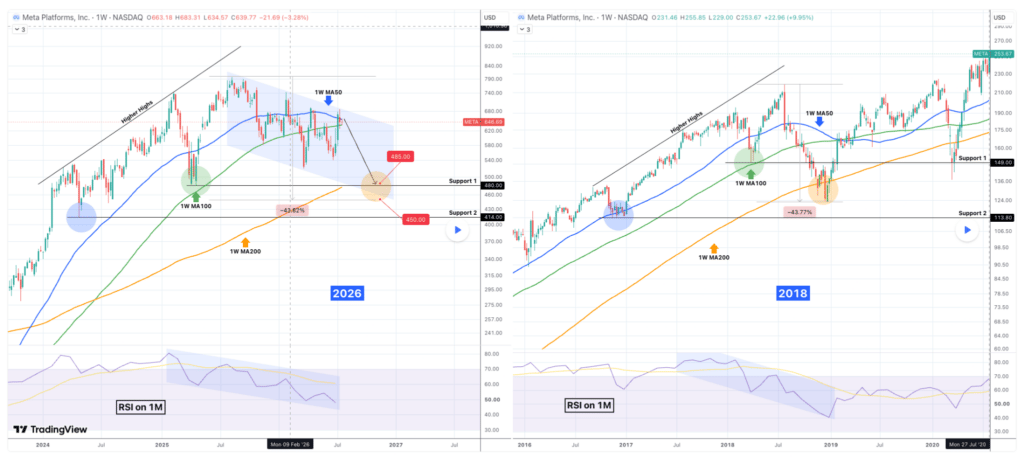
TradingShot argued that the stock has entered a new bearish phase after being rejected at the upper boundary of a long-term descending channel that has been in place since August 2025.
The analysis shows Meta trading within a channel down pattern, with the stock recently failing to break above the lower-high trendline that has capped rallies since the record peak.
The analyst noted that the current setup closely resembles Meta’s 2018 correction. During that period, the stock initially found support at its 100-week moving average before rebounding to fresh highs.
However, that recovery was followed by a deeper sell-off that ultimately pushed the stock below its 200-week moving average and resulted in a total decline of 43.77%.
A similar pattern appears to be developing in 2026. Meta is currently trading between its 50-week and 100-week moving averages, mirroring the structure seen before the 2018 downturn accelerated.
Based on the projection, TradingShot expects META to reach a primary downside target of $485, a key support level that would place the stock below its 200-week moving average. The projected timeline suggests the target could be reached around mid-November 2026.
META stock key price levels to watch
If the correction unfolds in line with the 2018 fractal, TradingShot believes the decline could extend beyond $485.
Meanwhile, the analysis identified $450 as a potential maximum downside target, representing a 43.77% drawdown from Meta’s all-time high, matching the magnitude of the 2018 correction.
Such a move would imply an additional decline of roughly 30% from current price levels.
While the technical outlook points to further downside risk, Wall Street analysts remain largely positive on Meta’s long-term prospects.
The company continues to benefit from strong advertising revenue across Facebook, Instagram, WhatsApp, and Messenger, while investments in artificial intelligence remain a central growth theme.
Meta is also preparing to report second-quarter 2026 earnings on July 29, with investors closely watching revenue growth, AI monetization progress, and capital expenditure guidance.