
SpaceX (NASDAQ: SPCX) could fall as low as $100 by mid-August 2026 if its post-IPO selloff continues, according to a technical analysis.
The SpaceX stock forecast, published on TradingView on June 23 by TradingShot, comes after shares extended their sharp decline, falling more than 28% from the June 16 high of $225.
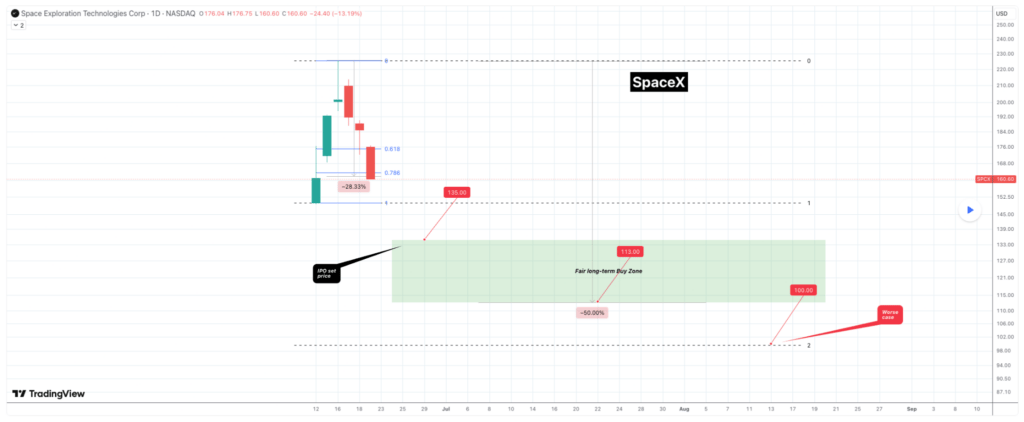
The stock has already broken below a key 0.786 Fibonacci retracement level, a development that TradingShot believes increases the likelihood of further downside.
SPCX stock next major support
Based on the chart analysis, TradingShot identified $150 as the next major support level, corresponding to SpaceX’s IPO opening price. However, the analyst suggested that a deeper correction remains possible as the stock works through its first major post-listing pullback.
According to TradingShot’s outlook, SpaceX’s long-term accumulation zone begins at the company’s IPO price of $135 and extends down to approximately $113.
The analysis highlights a fair long-term buy zone between those levels, representing a decline of up to 50% from the stock’s post-IPO peak.
More notably, the analysis projects a potential move toward $100 through a 2.0 Fibonacci extension. The projected timeline places this scenario around mid-August 2026, although the analyst considers it less likely than a retreat toward the $113-$135 range.
At current levels of about $154, a decline to $100 would represent roughly a 35% downside.
SpaceX completed the largest IPO in history on June 12, raising about $75 billion at a price of $135 per share. The stock opened at $150 and quickly surged above $225 during its first days of trading, pushing its valuation close to $3 trillion.
However, by the close of trading on June 22, shares had erased most of their post-IPO gains after three consecutive losing sessions.
Investors have increasingly questioned whether the company’s valuation can be justified given its current financial profile and ambitious long-term expansion plans.
Why SpaceX stock is crashing
Several factors have weighed on sentiment, including profit-taking after the initial IPO euphoria, concerns over dilution following the company’s acquisition activity, and skepticism surrounding its AI and space infrastructure initiatives.
The company also announced a bond offering despite holding substantial cash reserves, a move that sparked debate about future capital requirements.
Investors are also watching upcoming lockup expirations tied to SpaceX’s first quarterly earnings report as a public company.
Additional shares are expected to enter the market in late July and early August, potentially increasing selling pressure if investor sentiment remains weak.
While long-term bulls continue to point to Starlink’s growth, SpaceX’s dominance in commercial launches, and the company’s broader AI ambitions, TradingShot’s technical outlook suggests the SpaceX stock price may not have found a bottom yet.