

Vitalik Buterin, Ethereum (ETH) co-founder, formally proposed on July 6, 2026, an overhaul that could make validator identities on the network effectively untraceable, a shift that involves more than $71 billion.
In the proposal dubbed ‘The Extremely Lean Chain, Buterin outlined a multi-phase redesign of Ethereum’s consensus layer, the network’s component that governs staking, validator agreement, and finality. Under the proposal, validators would replace the protocol’s current epoch-by-epoch reward accounting with a new validator-driven model that proves their balances daily using zero-knowledge (ZK) STARK proofs.
The first Phase of the implementation is expected to strip pubkeys and reward calculations from the beacon chain, replacing them with a 5-byte index and daily STARK-proven balances, with no slashing for late proofs. Phase 2 would then make the validator registry refresh daily, re-randomizing each validator’s identity so only they can link their past and present activity.
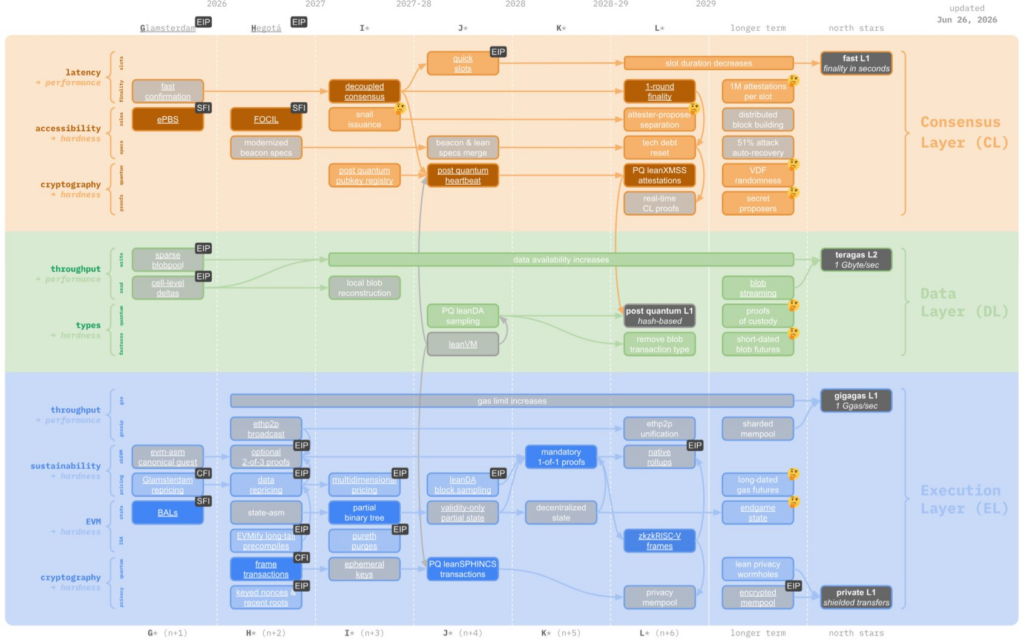
Buterin eyes to stir up ETH institutional adoption via privacy on staking
Buterin’s proposal could introduce the time-tested ZK privacy to the Ethereum staking industry. Furthermore, more institutional investors could participate in the scalable anonymous shaking industry.
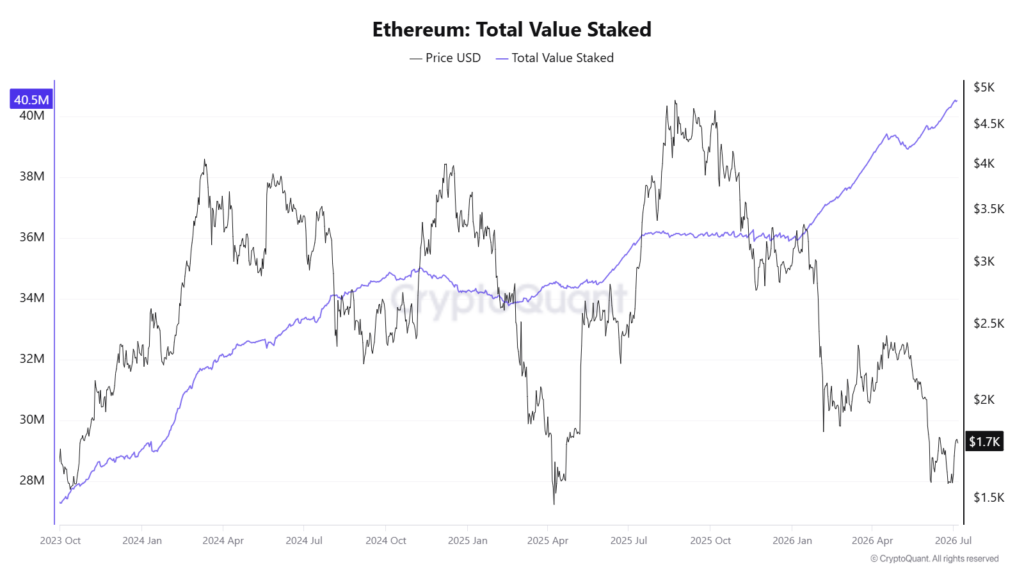
At press time, Ethereum staking was at an all-time high (ATH) of about 40.5 million ETH, valued at about $71.44 billion, according to data from CryptoQuant.
Tom Lee’s Ethereum staking is among the top institutional staking on the network and stands to benefit from the proposal by Buterin. Moreover, BitMine Immersion Technologies (NYSE: BMNR) recently reported that it has staked 4,879,157 ETH, valued at approximately $8.6 billion at the time of reporting.
If Buterin’s upgrade proposal is adopted, the bullish ETH price forecast could occur, driven by institutional demand. Furthermore, the macro ETH price forecast from top experts, including Robert Kiyosaki, as Finbold highlighted, remains bullish.