

A Wall Street analyst has reaffirmed a cautious stance on Microsoft (NASDAQ: MSFT), maintaining a $415 price target despite the recent volatility that has seen the stock drop more than 20% in 2026.
In a June 23 research update, Stifel analyst Brad Reback reiterated his ‘Hold’ rating on Microsoft stock and left his price target unchanged at $415. Based on Microsoft’s current share price of $367, the target implies potential upside of about 13%.
The update comes as Microsoft announced a 20-year power agreement with Chevron tied to Project Kilby, an initiative designed to support the company’s expanding energy needs as AI-related data center demand continues to rise.
According to the analyst note, Stifel views the project’s timeline conservatively. While the first power delivery is currently expected in 2028, the firm believes that date represents the earliest realistic scenario.
Reback highlighted that Project Kilby remains in the pre-construction stage and is still awaiting a Final Investment Decision, which is expected around the end of 2026.
The project must also progress through planning, environmental review, and permitting processes before construction can begin.
As a result, Stifel sees execution and regulatory risks that could extend the timeline beyond current expectations, leading the firm to maintain its neutral outlook on Microsoft shares.
Although Stifel remains on the sidelines with a ‘Hold’ rating, broader Wall Street sentiment toward Microsoft remains positive.
Wall Street bullish on MSFT stock
According to analyst consensus data from TipRanks, 36 Wall Street analysts currently cover Microsoft stock, with 35 assigning ‘Buy’ ratings and one recommending ‘Hold’. No analysts currently rate the stock as a ‘Sell’.
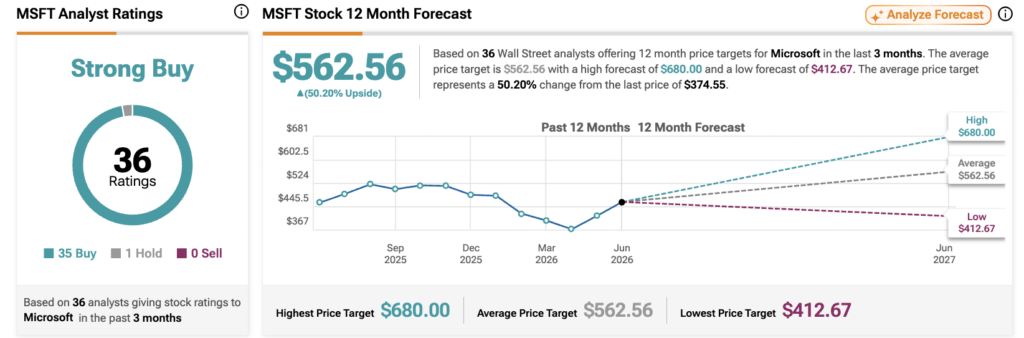
The average Microsoft stock forecast stands at $562.56, implying roughly 53% upside from recent trading levels. Analyst targets range from a low of $412.67 to a high of $680.
While Stifel’s $415 target is among the more conservative forecasts on Wall Street, the firm’s latest note suggests that uncertainty surrounding the timing and execution of Microsoft’s long-term energy infrastructure plans remains a key factor behind its cautious stance.