
Wall Street analysts have set an average 12-month price target of $1,843.44 for SanDisk (NASDAQ: SNDK) stock, based on forecasts from 16 experts over the past three months.
The target implies a 6.9% downside from the stock’s most recent closing price of $1,980.10.
Price targets range from a low of $1,000 to a high of $3,250, highlighting differing views on the sustainability of SanDisk’s AI-driven growth.
Despite the cautious consensus target, analyst sentiment at TipRanks remains strongly bullish. SanDisk carries a ‘Strong Buy’ rating, with 14 analysts recommending the stock and two suggesting a hold. No analysts currently rate SNDK as a sell.
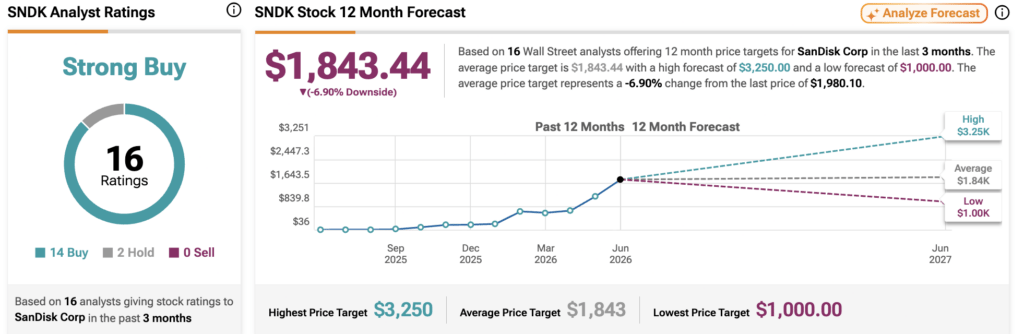
The bullish stance follows a remarkable run for SNDK since its February 2025 spin-off from Western Digital. Shares have surged from roughly $36 shortly after the separation to nearly $2,000, making SanDisk one of the strongest performers in the AI infrastructure sector.
SanDisk has emerged as a major beneficiary of surging demand for NAND flash memory and enterprise SSDs used in AI data centers.
SNDK fundamentals
At the same time, SanDisk’s bullish outlook is supported by strong business momentum. In its latest quarter, revenue surged to $5.95 billion, while earnings and profit margins comfortably beat Wall Street estimates.
Growth was driven in part by rapidly expanding datacenter sales as cloud providers continue investing heavily in AI infrastructure.
Analysts also cite tight NAND supply, strong pricing power, and production capacity that is largely sold out through 2026.
Combined with rising demand for high-performance storage used in AI training and inference, these trends are expected to support earnings growth and profitability into 2027.
While analyst ratings remain positive overall, the average SNDK stock forecast suggests expectations may already be largely reflected in the share price.
Following its dramatic rally, SanDisk trades at elevated valuation multiples compared with historical memory-sector averages.
The stock’s rapid appreciation has also increased concerns about potential volatility if AI spending slows, storage supply expands faster than expected, or broader market conditions weaken.