
SpaceX (NASDAQ: SPCX) stock is under pressure, with shares falling over 4% in pre-market trading on Monday and extending a sharp pullback from recent record highs.
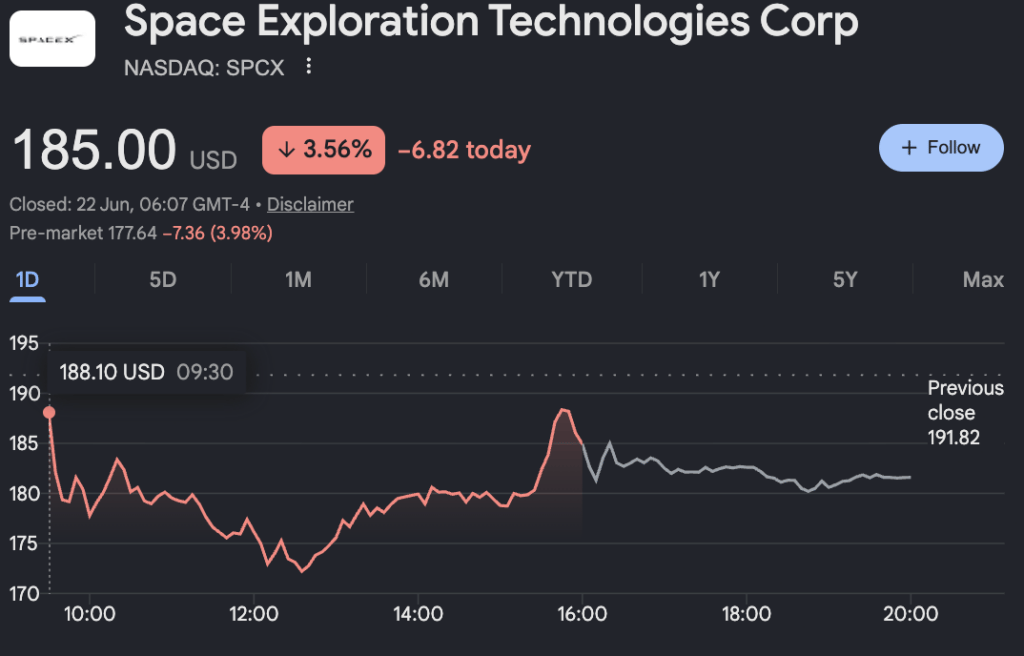
The stock closed at $185 on Friday, down 3.56% for the session, before slipping further to around $177.50 in premarket trading, representing an additional 4.05% decline.
A key reason why SpaceX stock is crashing today is the unwinding of the extraordinary rally that followed the company’s historic public debut.
Notably, SpaceX went public on June 12 through a record-breaking $75 billion IPO priced at $135 per share. The stock surged after listing, climbing above $225 and briefly pushing its market capitalization beyond $2 trillion, making it one of the world’s most valuable companies.
However, that momentum has faded, with shares retreating into the $178-$185 range as early investors lock in gains following the rapid post-IPO advance.
The limited public float that initially fueled the rally has also contributed to heightened volatility as investor sentiment shifts.
At the same time, analysts have identified valuation concerns as another major factor behind the recent selloff.
SpaceX stock valuation concerns
Even after the pullback, SpaceX continues to trade at more than 90 times projected forward revenue by some estimates. Such valuations imply exceptionally strong future growth from both the Starlink satellite internet business and the company’s launch operations.
Without an immediate catalyst, such as major Starship milestones or stronger-than-expected operational updates, investors have become increasingly cautious about paying premium multiples for future growth.
Investor sentiment has also been weighed down by SpaceX’s all-stock acquisition of the artificial intelligence coding startup Cursor, which is valued at approximately $60 billion.
While the transaction is intended to strengthen the company’s AI capabilities, some investors are concerned about potential share dilution and the challenges of integrating a large acquisition during the company’s first weeks as a publicly traded company.
Investors are also watching share unlocks expected after second-quarter earnings, which could increase the stock’s public float. The prospect of additional shares entering the market has added to selling pressure following SpaceX’s rapid post-IPO rally.
Despite the recent pullback, long-term investors remain focused on SpaceX’s leadership in reusable rockets, commercial launches, and Starlink.