

As the stock market heads toward the 2026 United States midterms, insights from an artificial intelligence model have identified three equities to watch during the election period, which is typically marked by volatility.
In this line, data shared by financial commentary platform The Kobeissi Letter shows the Dow Jones Industrial Average has followed a consistent seasonal pattern in midterm years since 1896.
From May through October, the index has delivered an average return of 1.2%, below the 2.2% average in non-midterm years.
At the same time, from November through April, returns average 10.5%, compared to 3.5% in other years.
The roughly 9.3 percentage point gap between summer and winter returns highlights a shift in investor behavior, driven by policy uncertainty ahead of elections and renewed risk appetite once outcomes become clear.
To determine which stocks are worth buying ahead of the midterms, Finbold sought insights from OpenAI’s ChatGPT, which identified three picks.
Nvidia (NASDAQ: NVDA)
At the top is semiconductor giant Nvidia (NASDAQ: NVDA), which stands out as the portfolio’s highest-beta post-election rebound play. The company controls about 80% of the AI accelerator market, though that share is expected to ease toward 75% as the market expands.
Fiscal 2026 revenue reached a record $215.9 billion, up 65% year-over-year, driven largely by data center sales of $193.7 billion. In the fourth quarter alone, revenue rose 73% to $68.1 billion, with data center contributing $62.3 billion.
Demand for the Blackwell platform remains strong, while the upcoming Vera Rubin architecture is expected to improve inference efficiency and reduce cost per token.
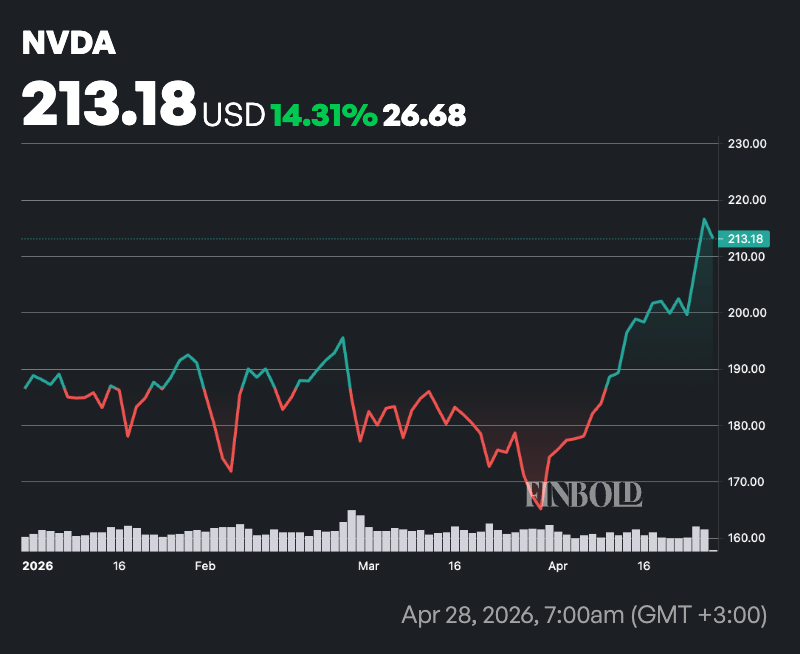
However, the stock remains sensitive to shifts in AI spending sentiment, hyperscaler capital expenditure trends, and rising competition, making it volatile during periods of macro or policy uncertainty, but well-positioned for gains once clarity returns. At press time, Nvidia traded at $216, up 14% year to date.
Microsoft (NASDAQ: MSFT)
Microsoft (NASDAQ: MSFT) serves as the portfolio’s defensive anchor during pre-election volatility. The model noted that the company’s diversified base, spanning Azure, Microsoft 365, and enterprise software, offers resilience in risk-averse markets.
Azure growth has moderated but remains strong in the high-30% range, while industry-wide AI capital spending continues to support long-term demand. Copilot adoption has been gradual, with about 15 million paid seats, though usage is accelerating among large enterprises.
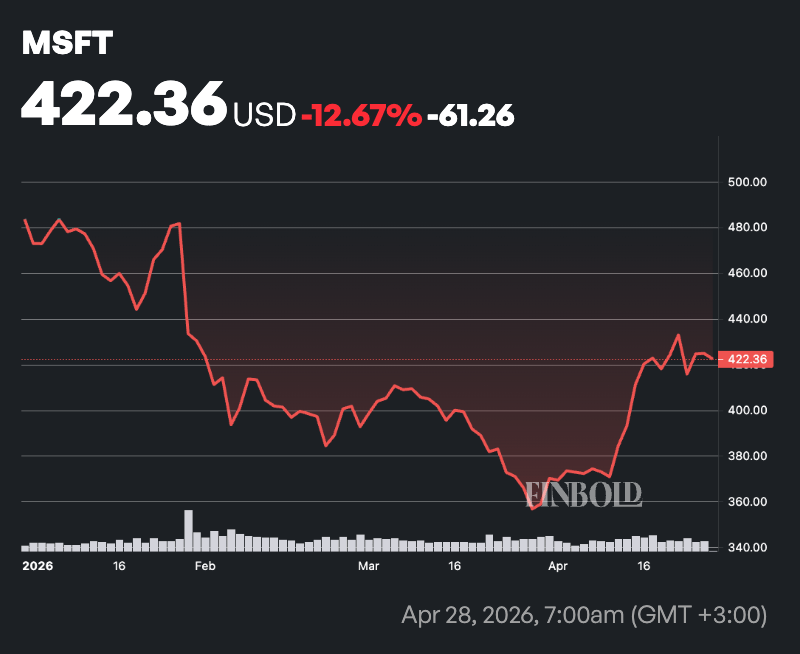
This mix of stability and AI exposure allows Microsoft to weather short-term weakness while retaining upside from the broader AI cycle. Microsoft shares closed Monday at $424, down 10.62% year-to-date.
Broadcom (NASDAQ: AVGO)
Broadcom (NASDAQ: AVGO) rounds out the portfolio as a lower-volatility AI infrastructure play. The company is seeing strong growth in custom AI chips and networking, with fiscal Q1 2026 AI semiconductor revenue rising 106% year over year to $8.4 billion, contributing to total revenue of $19.31 billion, up 29%.
Guidance points to further acceleration, with Q2 AI revenue expected at $10.7 billion and a path toward $100 billion in annual AI chip revenue by 2027.
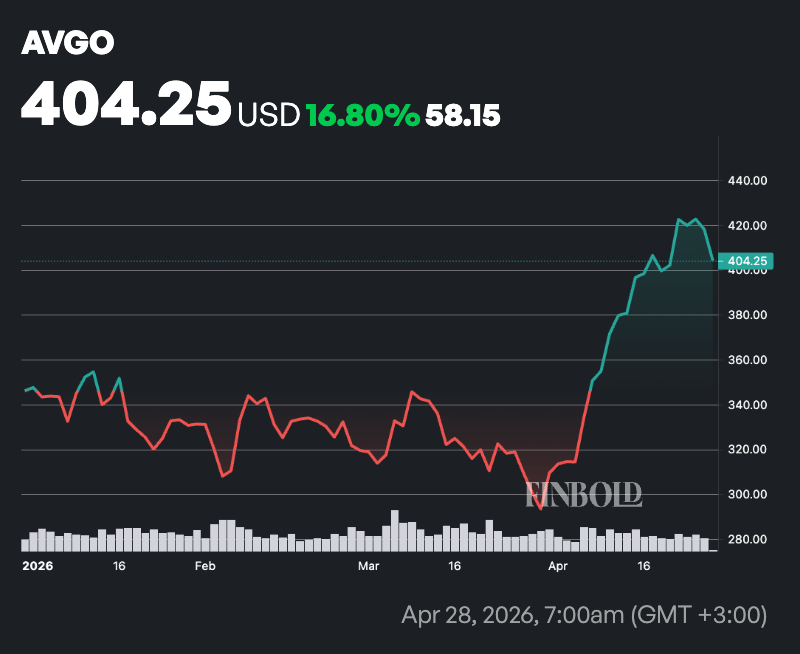
Unlike more sentiment-driven GPU names, Broadcom is tied to long-term enterprise and hyperscaler spending cycles, making it more resilient to political or market noise. At press time, Broadcom traded at $418, up more than 20% YTD
In summary, while midterm cycles often bring volatility, broader macro factors remain decisive. Federal Reserve policy, inflation, and earnings growth will determine whether the pattern holds.
If conditions remain stable, political clarity and continued AI investment could reinforce this historical market cycle.