

Stablecoins are among the fast-growing digital financial products, offering a way to access blockchain-based payments without the extreme volatility that accompanies leading cryptocurrencies such as Bitcoin (BTC).
Among the emerging players in this space, several platforms stand out in their attempt to enable faster and more efficient stablecoin transactions. Below, Finbold has highlighted the 5 best stablecoin deposit infrastructure platforms for fintechs, each with its own specialized use cases and unique offerings.
- Rhino.fi;
- Brdige;
- Brale;
- Paxos;
- ConduitPay.
1. Rhino.fi
Rhino.fi is an API-first stablecoin deposit infrastructure platform that enables instantaneous, scalable stablecoin deposits through a single Application Programming Interface. As such, it markets itself to on-chain neobanks, wallets, fintechs, and other on-chain platforms.

Under the hood, Rhino.fi operates a pre-funded liquidity network in order to minimise slippage and push near-instant settlement across 25+ networks. So far, the platform has processed over $1 billion in transactions for a single partner in under 12 months across 300,000+ transactions.
A feature that sets Rhino.fi apart is the Smart Deposit Address infrastructure, which automates onboarding without requiring users to manually select chains. In other words, the tool automates everything from routing to settlement and activation.
Moreover, Rhino.fi’s so-called Stablecoin 1:1 feature guarantees 1:1 conversion rates between USD Coin (USDC) and Tether (USDT), with no hidden spreads. Currently, the feature supports networks including, but not limited to, Ethereum (ETH), Solana (SOL), and Ton Network (TON).
2. Bridge
Bridge is another stablecoin deposit infrastructure platform that handles minting, burning, transfers, and conversion. The platform focuses heavily on stablecoin orchestration APIs that allow fintechs to move, store, convert, and issue stablecoins within a single integration layer.
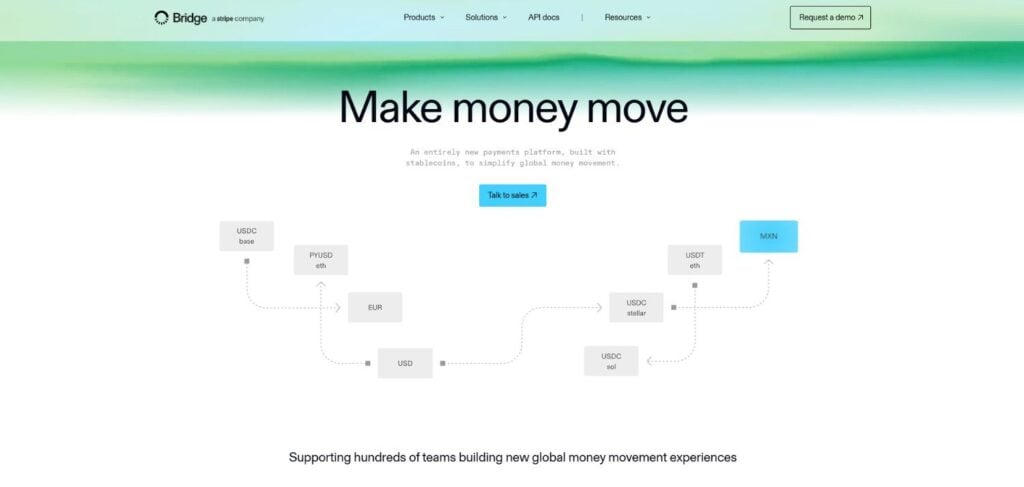
One of Bridge’s most important offerings is its Orchestration API, which enables faster, lower-cost international transfers. In a similar vein, the company also offers an issuance API that allows businesses to create their own stablecoins.
In addition, Bridge supports global treasury management by helping companies transition between local currencies and stablecoins more efficiently, while its infrastructure enables payroll and contractor payouts in digital dollars for more streamlined cross-border compensation.
3. Brale
Third on our list, Brale focuses on enabling regulated stablecoin-powered payment flows for businesses and fintechs. At its core, it functions more or less as a digital representation of fiat currency, typically pegged to the U.S. dollar on a 1:1 basis.
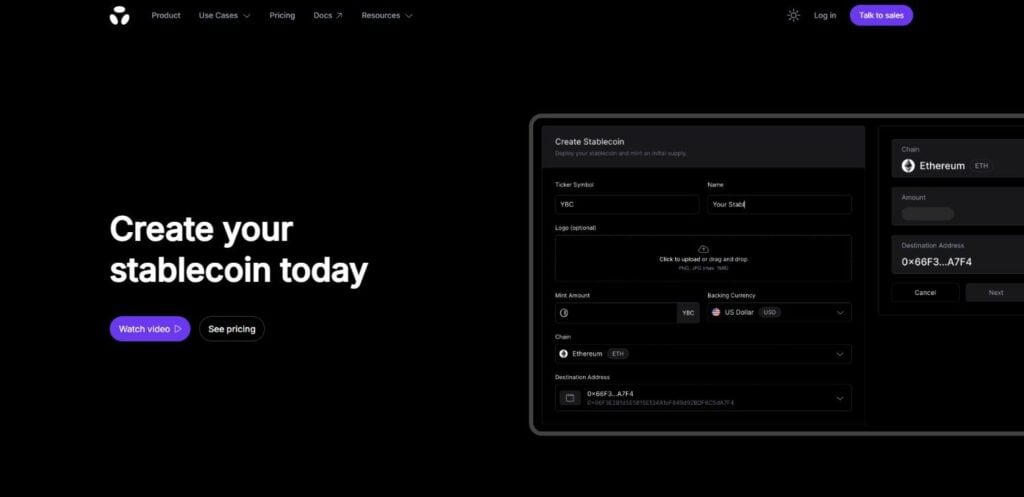
In other words, Brale seeks to combine the speed and programmability of blockchain technology with the relative price stability of traditional money. As a result, the platform allows the user to transact digitally without worrying about large fluctuations in value.
All transactions on Brale are recorded on a decentralized ledger, and unlike traditional banking systems, it relies on no intermediaries. Accordingly, stablecoins can be transferred across borders almost instantly. In addition to making payments and deposits, users can also lend, borrow, and stake using stablecoins.
4. Paxos
Paxos is one of the most established stablecoin deposit infrastructure platforms, with a strong emphasis on regulatory compliance. As for its offerings, it primarily seeks to reduce transaction costs compared to traditional card networks and legacy payment systems by using stablecoin rails.
These rails allow businesses to lower payout fees while improving overall settlement efficiency, as transactions can be completed almost in real time. With Paxos, businesses can accept payments in widely used stablecoins, such as USDC, while customizing their own payment flows, gas fee structures, and settlement logic.
Once payments are received, merchants can instantly convert stablecoins into fiat currency or choose to hold digital assets. Currently, Paxos supports payment flows across major blockchains, including ETH, SOL, and Polygon (MATIC).
5. ConduitPay
Last but not least, ConduitPay is one of the more specialized stablecoin deposit infrastructure platforms for fintechs, as it is particularly marketed to businesses in Africa. It processes more than $10 billion in annualized volume and is available in major markets on the continent, such as Nigeria, Kenya, and Ghana. However, the company also supports payments across the Americas, Asia-Pacific, and Europe.

The platform is integrated with payment systems such as FedWire, FedNow, SEPA Instant, SPEI, Faster Payments, and a range of other bank transfer and mobile money rails across Africa. In addition, businesses in Kenya and Ghana can settle directly into M-Pesa wallets and mobile money accounts.
Furthermore, Conduit offers virtual accounts in U.S dollar, euros, and British pounds, which lets businesses receive and manage funds through Automated Clearing House (ACH) routing numbers, IBANs, and U.K. sort codes. Beyond payments, the company has started expanding into broader stablecoin infrastructure, with features such as yield orchestration and embedded wallets.
Final Thoughts
As discussed in the introduction, stablecoin payments have become integral to digital finance, allowing businesses to mitigate the volatility of digital assets and facilitating quicker, more reliable, and transparent transactions.
Consequently, payment providers have worked on solutions that promote stablecoin payment accessibility, each addressing distinct niches, regional preferences, and specific client demands.
Some of them, such as Rhino.fi, stand out for their flexibility and streamlined onboarding, while others focus on localized payment infrastructure in emerging markets.
This diversity reflects the broader maturation of the stablecoin sector and gives clients a chance to explore solutions tailored to their operational needs and priorities.
Disclaimer: The content on this site should not be considered investment advice. Investing is speculative. When investing, your capital is at risk.
FAQs
What are stablecoin deposit infrastructure platforms?
Stablecoin deposit infrastructure platforms allow businesses to accept, convert, settle, and store stablecoins such as USDC or USDT.
What is the best stablecoin deposit infrastructure platform for fintechs?
There are many stablecoin deposit infrastructure platforms used by fintechs. Some of them include Rhino.fi, Bridge, Brale, Paxos, and Conduit.
Why do fintechs use stablecoin deposit infrastructure?
Fintechs use stablecoin deposit infrastructure platforms to improve settlement speed, streamline cross-border payments, and gain access to 24/7 liquidity without relying solely on traditional banking.