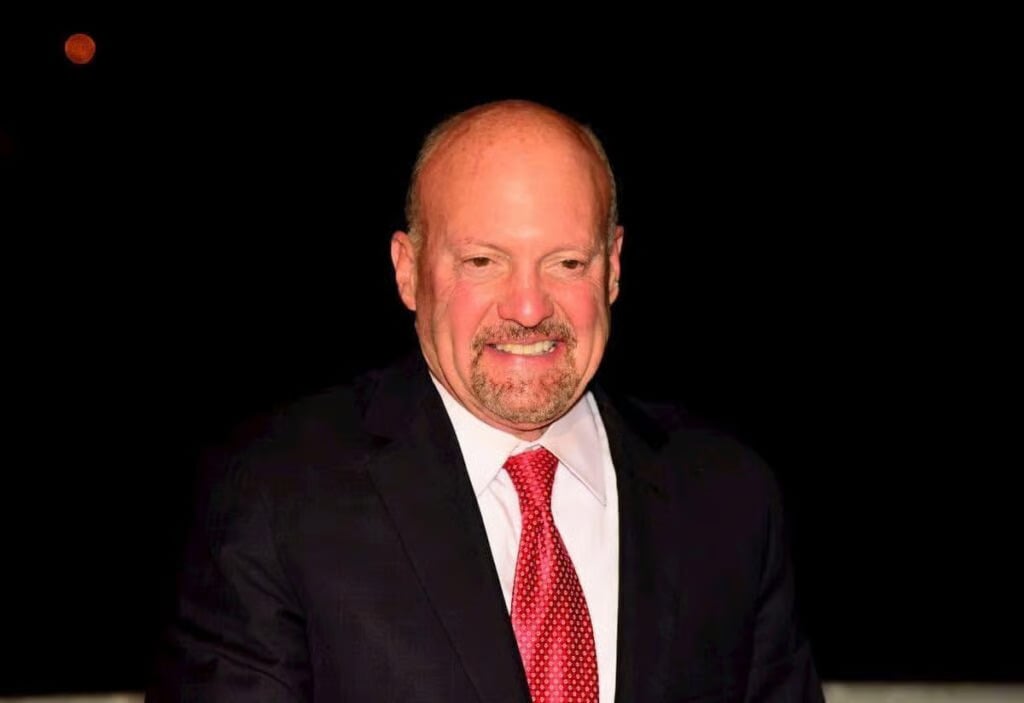

October and November proved comparatively poor months for Jim Cramer, considering many of his top stocks – including his favorite, Nvidia – suffered steep losses.
Still, while not in focus for the time being, a different semiconductor giant, Intel (NASDAQ: INTC), might be the starkest example of the former hedge fund manager and TV personality’s ill luck.
On July 15, 2026, the day Cramer published an X post in which he reaffirmed that INTC was his ‘favorite stock,’ the equity was closed at $102.99. On Monday, November 16 – the latest regular session – Intel met the evening bell trading at $55.47.
Thus, the blue-chip chipmaker crashed 46.14% since the TV host issued his strong endorsement. Had an investor decided to heed Cramer’s advice and put $1,000 in INTC, they would have suffered a $461.40 unrealized loss and would have been left with a position worth $538.60.
The Tuesday, November 17, pre-market is, by press time, making the situation even worse as Intel stock declined an additional 1.75% to $54.50.

Has Intel stock been destined for a correction since H1 2026?
Elsewhere, while the last two months – and the first half of November in particular – took the spotlight, the processes that led to INTC’s stark loss since Cramer’s endorsement have arguably been ongoing since May.
Specifically, American big tech saw outsized gains since late 2022 and the public release of ChatGPT, riding high on the hopes of an economic and societal revolution expected of the development of AI.
Intel joined the uptrend in earnest in mid-2025 with a major U.S. government investment in the stock and is, in fact, up nearly 124% since then, even after the latest losses.
Still, while the consensus appears to have changed toward the existence of an AI bubble in recent months, signs of trouble were evident already in the second quarter (Q2) of 2026.
The three key AI and Intel stock bearish signs from May
For example, May featured three bearish developments. During the month, a short-selling company, Culper Research, published a report alleging that Nvidia was engaged in a restriction-evasion operation and taking in significant illicit revenue from China.
Early November developments have lent significant credence to the allegations.
Later in May, Uber’s president and chief operating officer Andrew Macdonald ushered in the end of the ‘tokenmaxxing’ period by stating that AI spending is getting ‘harder to justify’.
As The Verge conveyed at the time, Macdonald said:
That link is not there yet, right? I think maybe implicitly there is more that is getting shipped, but it’s very hard to draw a line between one of those stats and, ‘Okay, now we’re actually producing 25 percent more useful consumer features. I think over the coming quarters and years, maybe that will become clearer, but I think today it’s hard, even if some of the underlying metrics are trending in a really astronomical direction.
The third bearish development came with the user outcry against the then-planned changes in Microsoft’s pricing of GitHub Copilot – a change that simultaneously offered a strong indication that big tech was heavily subsidizing its users.
Subsequent events such as Oracle’s credit rating getting downgraded, public sentiment turning hostile regarding AI data centers, reports that both Microsoft and Amazon purchased far more chips than they can use, and the latest series of scandals rocking Nvidia all contributed to Jim Cramer’s endorsement of Intel stock being starkly misplaced.
Featured image via Shutterstock