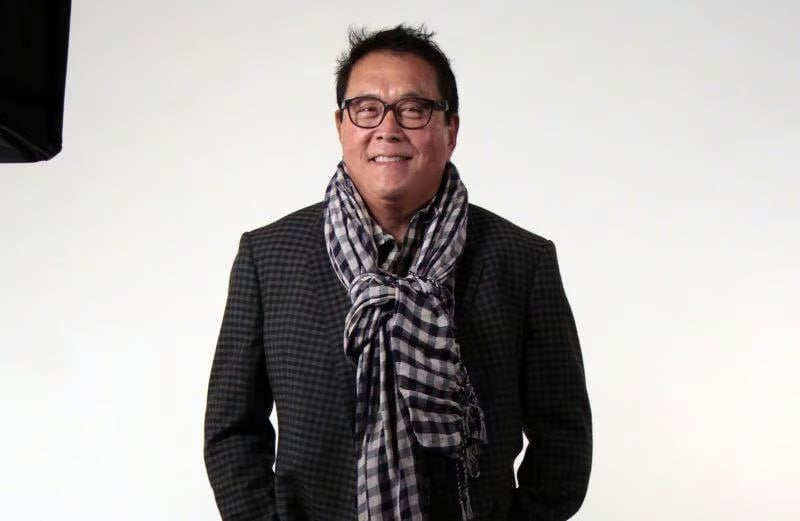
In an apparent break from declaring that the greatest financial crisis in history has started and urging his followers to invest in Gold and Bitcoin (BTC), Robert Kiyosaki took to X on September 23 to share some of his life – and investing – philosophy.
The author of the best-selling personal finance book ‘Rich Dad Poor Dad’ anchored his post in an arguably controversial interpretation of the verse ‘And the word became flesh…. and dwelt amongst us,’ concluding that one’s words become one’s reality.
Critically, he stated that it is exactly the words – or rather the mindset emerging from them – represent one’s biggest asset and that they are free.
Robert Kiyosaki reveals how the biggest, free asset can be a liability
Simultaneously, he warned that they can also prove to be a person’s biggest liability and gave ‘I can’t afford it’, ‘l’ll try’, and ‘the rich are greedy’ as key examples.
Following from this assessment, Robert Kiyosaki explained that ‘the poor’ get educated, get employment, and ‘work for a paycheck’ before underlining that ‘earned income is the worst income’ in part due to often being taxed at the highest rate.
Turning his attention to ‘the middle class’, the ‘Rich Dad’ author outlined a similar trajectory but added investing in 401Ks and IRAs as parts of the path before concluding this strata works for ‘portfolio income’, which he described as the second-worst – also due to taxes.
Lastly, Robert Kiyosaki highlighted that ‘the rich’ work for ‘passive income’ – a type he described as coming without working and that often goes untaxed.
The author then reflected on Warren Buffett’s legendary statement that he pays less in taxes than his secretary and concluded that the approach of ‘the rich’ is the reason for the disparity.
Robert Kiyosaki did not, however, reflect on the fact that The Oracle of Omaha’s comments on the tax rate of some of his employees were an explicit call to tax ‘the rich’ more and not a boast about his own savviness.
What does Robert Kiyosaki mean by ‘passive income’?
Similarly, the ‘Rich Dad’ writer did not attempt to define ‘passive income’ in the X post, though his earlier commentary does reveal what his favoured types of ‘work’ and assets are.
Robert Kiyosaki has made numerous calls in recent years to acquire cash-generating businesses, and he owns a wagyu beef ranch. Curiously, the ‘Rich Dad’ is allegedly focusing on selling semen and does not kill cattle for meat.
Given the praise of ‘passive income’, it would appear that Kiyosaki merely collects rent from owning the ranch and does not get involved in running it, though such a conclusion is speculative.
However, his being in the rent business more broadly is not speculative, as he had boasted in the past about owning 15,000 homes – though a recent Vanity Fair article casts some doubt on whether he added a zero to the number.
Notably, however, such operations generally incur taxes.
Is this how ‘Rich Dad’ R. Kiyosaki evades taxes?
Two other tactics Kiyosaki is known to favor – investing in cryptocurrencies like Bitcoin and Ethereum (ETH) and commodities such as gold and Silver – and a separate boast – that he is $1.2 billion in debt – offer more insights into the strategy he briefly outlined in the X post.
Indeed, the so-called ‘Buy, Borrow, Die’ tactic has become exceptionally popular among America’s wealthiest individuals and families.
In a nutshell, it involves acquiring assets – untaxable until the gains are realized – borrowing money for life expenses against said investments – banks tend to value relationships with high-net-worth individuals over having the debts paid back in full within any set timeframe – and living out the rest of one’s life – any appreciation becomes untaxable after death.
Finally, while the estate tax should, in theory, ultimately enable the public to take a cut eventually, there are numerous loopholes that make evading this levy relatively easy.
Featured image via RichDad.com