

Investors searching for the best time to buy SpaceX (NASDAQ: SPCX) stock after its record-breaking initial public offering (IPO) may be better served by patience than by chasing the rally, according to analysis from ChatGPT.
SpaceX shares have surged since the company’s historic IPO, which raised approximately $75 billion at $135 per share, briefly pushing the aerospace giant’s valuation above $2 trillion.
By press time, SPCX stock was trading around $160 after ending Friday’s session nearly 20% higher. In pre-market trading on Monday, the stock gained almost 6% to $170.45.
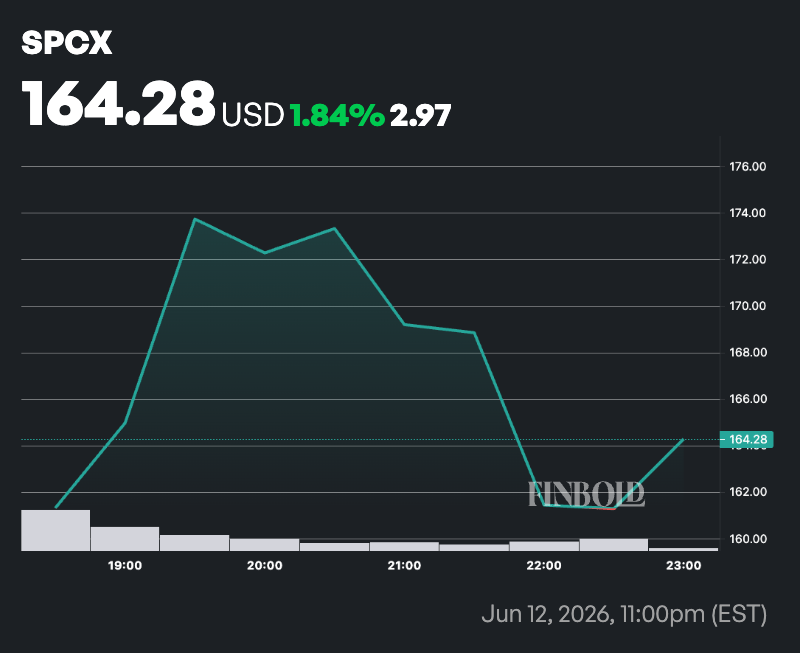
SPCX stock ideal entry point
Despite the strong debut, several factors suggest a more attractive entry point could emerge in the coming months.
According to ChatGPT’s analysis, the most favorable risk-reward setup could emerge one to three months after the IPO, once initial enthusiasm fades and investors gain greater clarity on the company’s fundamentals.
ChatGPT noted that major IPOs often experience heightened volatility in their early weeks as investors establish positions, and SpaceX appears to be following that pattern after gaining nearly 20% on its debut.
Rather than chasing the rally, the AI model identified a 15% to 25% pullback from post-IPO highs as a potentially more attractive entry point. Such corrections are common as investors reassess valuations after the initial excitement fades.
For long-term investors, ChatGPT suggested gradually building positions during periods of weakness rather than deploying all capital at current levels.
The AI also highlighted valuation as a key consideration. Despite SpaceX’s dominance in commercial space launches and the rapid growth of Starlink, some analysts believe the stock’s valuation may be running ahead of fundamentals.
SpaceX stock analysts concern
This comes after CFRA initiated coverage of SpaceX with a ‘Sell’ rating and a $115 price target, citing valuation and execution risks. In contrast, bullish analysts have issued targets between $165 and $190, highlighting uncertainty around the stock’s fair value.
Like most IPOs, the majority of SpaceX shares remain locked up, preventing insiders and early investors from selling immediately after the listing.
As these restrictions expire through 2027, additional shares could enter the market, increasing selling pressure and potentially creating better entry points for investors.
Historically, lockup expirations have weighed on newly listed stocks as early stakeholders take profits.
As a result, ChatGPT identified post-lockup periods as one of the most attractive opportunities to accumulate SpaceX shares.
Despite valuation concerns, the long-term bull case remains intact. Investors continue to bet on Starlink’s growth, while progress in Starship, xAI-related initiatives, and potential inclusion in major stock indices could provide further upside.
Index inclusion may be particularly significant, as membership in benchmarks such as the Nasdaq-100 could drive demand from passive funds and ETFs.
Investors will also be watching SpaceX’s first public earnings reports, Starlink subscriber growth, profit margins, and the expansion of its space and communications businesses.